Robocop (1987) by Paul Verhoeven, a sci-fi masterpiece, is a nice opportunity to explore the notion of memory. The movie is set in a dystopian Detroit. The city is bankrupt and a conglomerate called OCP — Omni Consumer Products — is set to take over the city. The first privatized department is the police department. The plot revolves around the story of Alex Murphy — a police officer killed in an ambush with a drug dealer named Clarence Boddicker also tied to a corrupt OCP manager. Following his death, Murphy is resurrected in a cyborg body with parts of his brain. What should have been a simple medical experiment turns into an exploration of Murphy’s past when his deep inner memory starts to resurface.
Robocop (1987) de Paul Verhoeven, chef-d’œuvre de science-fiction, est une belle occasion d’explorer la notion de mémoire. Le film se déroule dans un Detroit dystopique. La ville est en faillite et un conglomérat appelé OCP — Omni Consumer Products — s’apprête à en prendre le contrôle. Le premier service privatisé est celui de la police. L’intrigue tourne autour de l’histoire d’Alex Murphy, un policier tué dans une embuscade par un trafiquant de drogue nommé Clarence Boddicker, également lié à un directeur corrompu d’OCP. Après sa mort, Murphy est ressuscité dans un corps cyborg avec des parties de son cerveau. Ce qui aurait dû être une simple expérience médicale se transforme en une exploration du passé de Murphy lorsque ses souvenirs profonds commencent à refaire surface.
- Masculinity in face of change
- 80s US corporate culture and fragile masculinity
- Memory breakthrough
- When past and present collide
- Conclusions and moral
Masculinity in face of change
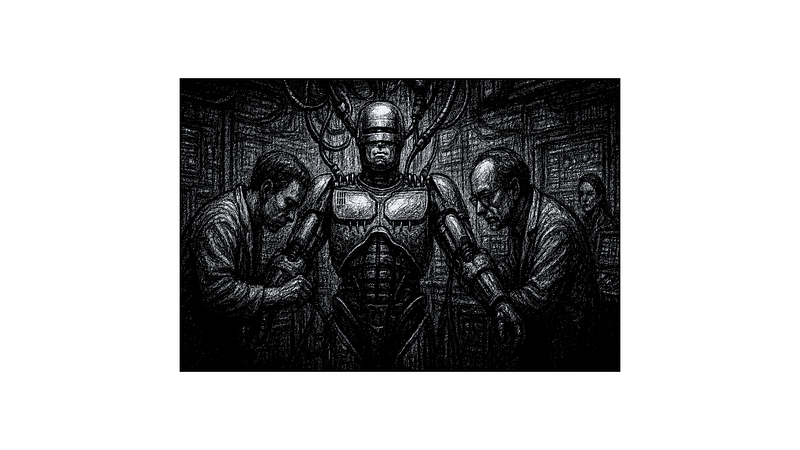
The questions regarding Murphy’s identity and memory are explored both in the first Robocop movie and also in the second one, made in 1990 by Irvin Kershner (the director behind “Star Wars: The Empire Strikes Back”). After his death following his encounter with Clarence Boddicker, Murphy’s body is taken by the OCP for a medical experiment: transplant his brain into a cyborg body to create a robot benefiting from his law enforcement experience. The scenes are unsettling. In the original Robocop, the viewer watches the scene from Murphy’s perspective. In front of him, OCP employees are talking about removing his left arm — his last physical body part — and to blank his memory. In the reboot made in 2014: the director went as far as creating a scene where Murphy discovers that nothing remains of his body aside his brain and some internal organs. That’s an interesting point when understood with what occurs later: Murphy’s mind and humanity remain despite his loss of most of his physical body. But it came at the cost of his manhood — something both tragic and ironic: Robocop is both a physical caricature of a “strong man” with his armor and gun, while being dispossessed of the genital attributes of a man. In Robocop 2 (1990), Murphy attempts to reconnect with his wife by stalking her. Feeling threatened, she complains to the OCP. The manager of the company has a discussion with Murphy in subtle but harsh terms:
What can you offer her? Companionship? Love? A man’s love?
Les questions relatives à l’identité et à la mémoire de Murphy sont abordées à la fois dans le premier film Robocop et dans le deuxième, réalisé en 1990 par Irvin Kershner (le réalisateur de « Star Wars : L’Empire contre-attaque »). Après sa mort suite à sa rencontre avec Clarence Boddicker, le corps de Murphy est récupéré par l’OCP pour une expérience médicale : transplanter son cerveau dans un corps cyborg afin de créer un robot bénéficiant de son expérience dans le domaine de l’application de la loi. Les scènes sont troublantes. Dans le Robocop original, le spectateur regarde la scène du point de vue de Murphy. Devant lui, les employés de l’OCP discutent de la possibilité de lui retirer son bras gauche, la dernière partie physique de son corps, et d’effacer sa mémoire. Dans le reboot réalisé en 2014, le réalisateur est allé jusqu’à créer une scène où Murphy découvre qu’il ne reste rien de son corps à part son cerveau et quelques organes internes. C’est un point intéressant lorsqu’on le comprend à la lumière de ce qui se passe plus tard : l’esprit et l’humanité de Murphy subsistent malgré la perte de la majeure partie de son corps physique. Mais cela s’est fait au prix de sa virilité, ce qui est à la fois tragique et ironique : Robocop est à la fois la caricature physique d’un « homme fort » avec son armure et son arme, tout en étant dépourvu des attributs génitaux d’un homme. Dans Robocop 2 (1990), Murphy tente de renouer avec sa femme en la harcelant. Se sentant menacée, elle se plaint à l’OCP. Le directeur de l’entreprise a une discussion avec Murphy en termes subtils mais durs :
Que peux-tu lui offrir ? De la compagnie ? De l’amour ? L’amour d’un homme ?
Following this discussion, the meeting with his wife is extremely cold as Murphy has accepted his dispossession of his masculine attributes. After Murphy’s wife touches his face, he says :
They made this to honour him. Laura’s husband is dead.
À la suite de cette discussion, la rencontre avec sa femme est extrêmement froide, car Murphy a accepté la perte de ses attributs masculins. Après que la femme de Murphy lui ait touché le visage, il lui dis :
Ils ont fait cela pour lui rendre hommage. Le mari de Laura est décédé.
In the 2014 reboot, while not discussed in this way, the topic is perfectly understandable with the laboratory scene where Murphy’s body is dismantled to show him the truth. The topic of sexuality was explored in a cut scene not integrated in the final cut of Robocop 2 (1990): Robocop walking in the police station witnesses a showering woman. He silently stares at her for a few minutes.
Dans la nouvelle version de 2014, bien que cela ne soit pas abordé de cette manière, le sujet est parfaitement compréhensible dans la scène du laboratoire où le corps de Murphy est démonté pour lui montrer la vérité. Le thème de la sexualité a été exploré dans une scène coupée qui n’a pas été intégrée dans la version finale de Robocop 2 (1990) : Robocop, qui se promène dans le commissariat, aperçoit une femme sous la douche. Il la regarde fixement pendant quelques minutes sans dire un mot.
A Youtube documentary exploring the corporate culture and mania in the 1980s, more specifically in the United States.
Un documentaire YouTube explorant la culture d’entreprise et la frénésie des années 1980, plus particulièrement aux États-Unis.
80s US corporate culture and fragile masculinity
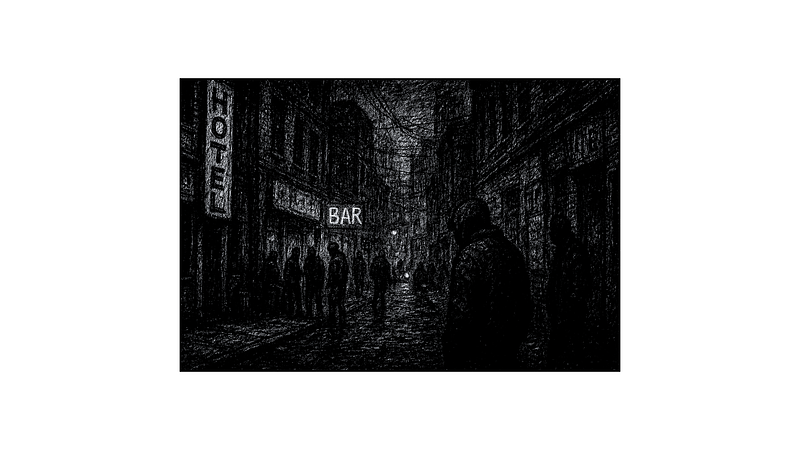
When Murphy wakes up after all the surgeries in the first Robocop, he is quickly transported to his ex-police station in Detroit. The scene is quite impressive with Robocop footsteps and digital/threatening sounds in the background. All the officers in the police station are impressed and run across the corridors to follow the cyborg. At his resting place in the police station, we can witness the initial “degradation” of Murphy’s status. He is going to be fed with “baby food” — as for his masculine attributes, this moment adds another layer of sad irony for Robocop: under the appearance of a “strong man”, he is fed like a toddler. All these things are part of the grotesque and fragile masculine aspect of the Robocop universe, as with the “cartoonish” 80s male employees and directors — the “greedy” OCP executives Bob Morton and Dick Jones, somewhat of a caricature of the 80s American corporate culture. Interestingly, there is no feminine figure of importance in the movie, apart from Anne Lewis — while her haircut, police officer role, unfiltered talking habit and style are clearly masculine. To conclude on this grotesque aspect in Robocop, it’s worth noting to note that the giant security robot conceived as a competitor of Robocop — the ED-209 — is a comical parody of an obvious contrast between a gigantic and intimidating robot, and its inability to understand simple instructions — the “office board” massacre scene when the robot opens fire on an employee because he wasn’t able to hear the gun fall on the ground — and its inability to get up on its feet after collapsing in the stairs.
Lorsque Murphy se réveille après toutes les opérations chirurgicales subies dans le premier Robocop, il est rapidement transporté à son ancien poste de police à Detroit. La scène est assez impressionnante, avec les pas de Robocop et des sons numériques menaçants en arrière-plan. Tous les agents du poste de police sont impressionnés et courent dans les couloirs pour suivre le cyborg. À son lieu de repos dans le poste de police, nous pouvons assister à la « dégradation » initiale du statut de Murphy. Il va être nourri avec des « aliments pour bébés » — comme pour ses attributs masculins, ce moment ajoute une autre couche d’ironie triste pour Robocop : sous l’apparence d’un « homme fort », il est nourri comme un enfant en bas âge. Toutes ces choses font partie de l’aspect masculin grotesque et fragile de l’univers Robocop, à l’instar des employés et dirigeants masculins « caricaturaux » des années 80, les cadres « cupides » d’OCP Bob Morton et Dick Jones, qui sont en quelque sorte une caricature de la culture d’entreprise américaine des années 80. Il est intéressant de noter qu’il n’y a aucune figure féminine importante dans le film, à l’exception de Anne Lewis, dont la coupe de cheveux, le rôle de policière, son franc-parler et son style sont clairement masculins. Pour conclure sur cet aspect grotesque de Robocop, il convient de noter que le robot de sécurité géant conçu pour concurrencer Robocop, l’ED-209 , est une parodie comique du contraste évident entre un robot gigantesque et intimidant et son incapacité à comprendre des instructions simples (la scène du massacre dans la « salle de réunion » où le robot ouvre le feu sur un employé parce qu’il n’a pas entendu le pistolet tomber par terre) et son incapacité à se relever après s’être effondré dans les escaliers.
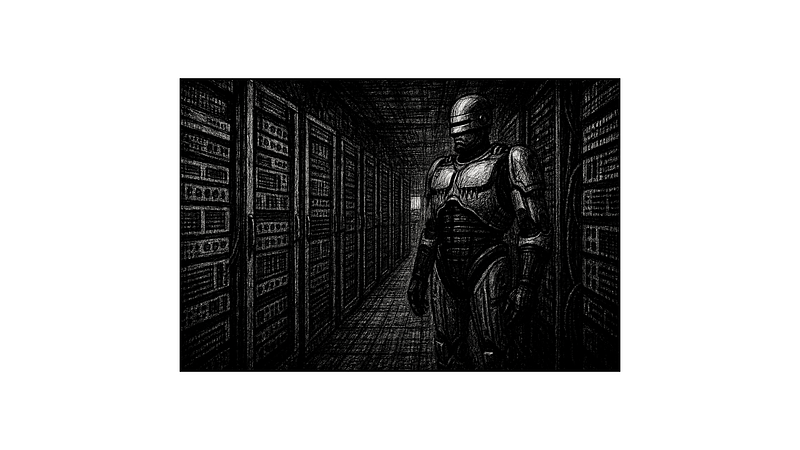
TV report on crack-epidemic in Detroit. This report from 1988 follows a young African-American woman struggling with her addiction.
Reportage télévisé sur l’épidémie de crack à Detroit. Ce reportage datant de 1988 suit une jeune femme afro-américaine qui lutte contre sa dépendance.
Memory breakthrough
All these things contrast with how Robocop is marketed in the movie universe: some kind of a “top-notch” police officer — TV reports, people supporting him, OCP being praised for Robocop’s actions…But everything is going to fade away. At one point, the “inner-self” entrenched in Murphy’s transplanted brain wakes up: he remembers his actions against Clarence Boddicker. Initially, it triggered a pre-recorded response from Robocop’s brain: he needs to arrest Clarence Boddicker. At this point, the movie transforms from a mere sci-fi movie to a more philosophical one. Robocop starts his inquiry into his “murder-dream” but unbeknownst to him: it’s his own murder.
Tout cela contraste avec la façon dont Robocop est présenté dans l’univers du film : une sorte de policier « hors pair » — reportages télévisés, soutien de la population, OCP félicité pour les actions de Robocop… Mais tout cela va s’estomper. À un moment donné, le « moi intérieur » ancré dans le cerveau transplanté de Murphy se réveille : il se souvient de ses actions contre Clarence Boddicker. Au départ, cela déclenche une réponse préenregistrée dans le cerveau de Robocop : il doit arrêter Clarence Boddicker. À ce stade, le film passe d’un simple film de science-fiction à un film plus philosophique. Robocop commence son enquête sur son « rêve meurtrier », mais à son insu, il s’agit de son propre meurtre.
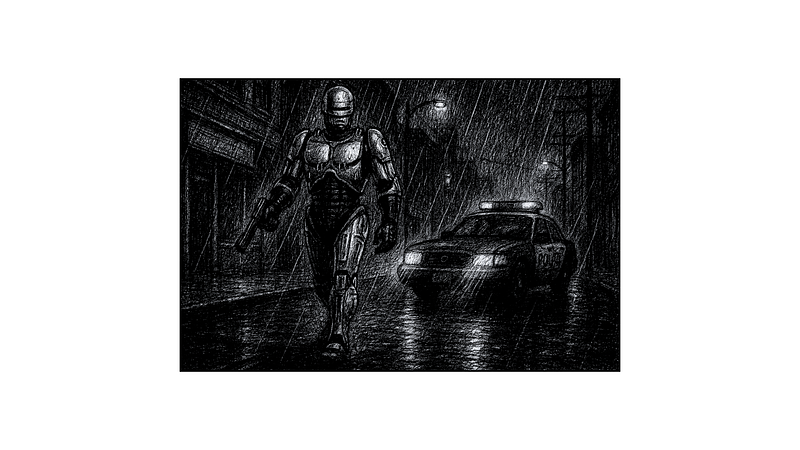
The inquiry led Robocop to unconsciously reinterpret his past and to discover the “truth”: he is Alex Murphy. Later in the film, Robocop moves to the police archive service to recover Murphy’s record. He visits Murphy’s home when suddenly most of his memories resurface: his wife, his son, his home, his past life… His face hidden behind his metal mask, Robocop understand “physically” that he is Alex Murphy when Anne Lewis — his police teammate — helps him to remove his mask and watches his face in a mirror. He touches his face and says:
I can feel them, but I can’t remember them.
L’enquête a conduit Robocop à réinterroger inconsciemment son passé et à découvrir la vérité : il est Alex Murphy. Plus tard dans le film, Robocop se rend au service des archives de la police pour récupérer le dossier de Murphy. Il se rend au domicile de Murphy lorsque soudain, la plupart de ses souvenirs refont surface : sa femme, son fils, sa maison, sa vie passée… Le visage caché derrière son masque métallique, Robocop comprend « physiquement » qu’il est Alex Murphy lorsque Anne Lewis, sa coéquipière de police, l’aide à retirer son masque et observe son visage dans un miroir. Il touche son visage et dit :
Je peux les sentir, mais je ne m’en souviens pas.
A short documentary about the 80s and life under the Reagan administration in the United States, with a focus on the economic recession.
Un court documentaire sur les années 80 et la vie sous l’administration Reagan aux États-Unis, axé sur la récession économique.
When past and present collide
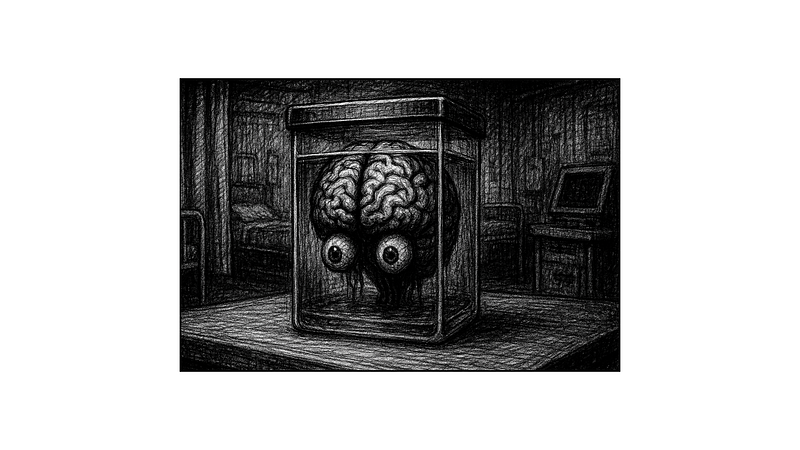
That’s probably the most unsettling aspect of Robocop’s identity: holding the memory of a past he can’t incarnate anymore — physically and emotionally. This topic is explored with another character in Robocop 2 (1990). The new attempts by the OCP to create “another Robocop” fail, when the idea of using a criminal brain is accepted. The villain’s brain of Cain — a cult-like drug dealer — is extracted to insert it in a robotic body. The scene is extremely creepy: the brain with the eyes attached stares at people in the hospital room. Did Cain understand what was happening to him? While not explicitly articulated in movies’ plots, the fact is that the entire “persona” never changed despite the transplantation. Murphy “survived” his transplant because of his deep values. The two “Robocop experiments” took their own lives because they were unable to reconcile with their new identities. Cain remains Cain despite the transplant: a dangerous and brutal drug-dealer.
C’est probablement l’aspect le plus troublant de l’identité de Robocop : garder le souvenir d’un passé qu’il ne peut plus incarner, ni physiquement ni émotionnellement. Ce thème est également exploré avec un autre personnage dans Robocop 2 (1990). Les nouvelles tentatives de l’OCP pour créer « un autre Robocop » échouent, lorsque l’idée d’utiliser le cerveau d’un criminel est acceptée. Le cerveau du méchant Cain, un trafiquant de drogue sectaire, est extrait pour être inséré dans un corps robotique. La scène est extrêmement effrayante : le cerveau, avec ses yeux encore attachés, fixe les personnes présentes dans la chambre d’hôpital. Cain comprend-t-il ce qui lui arrive ? Bien que cela ne soit pas explicitement mentionné dans l’intrigue des films, le fait est que la « personnalité » n’a pas changé malgré la transplantation. Murphy a « survécu » à sa transplantation grâce à ses valeurs profondes. Les deux « expériences Robocop » se sont suicidées parce qu’elles étaient incapables de s’accommoder de leur nouvelle identité. Cain reste Cain malgré la transplantation : un trafiquant de drogue dangereux et brutal.

A symbol of United States decline : the 1977 New-York blackout. In the late 1970s and early 1980s : most of the big cities (New-York, Chicago, Destoit…) were dealing with huge social, economic and infrastructure issues.
Un symbole du déclin des États-Unis : la panne d’électricité de New York en 1977. À la fin des années 1970 et au début des années 1980, la plupart des grandes villes (New York, Chicago, Detroit…) étaient confrontées à d’énormes problèmes sociaux, économiques et infrastructurels.
Conclusions and moral
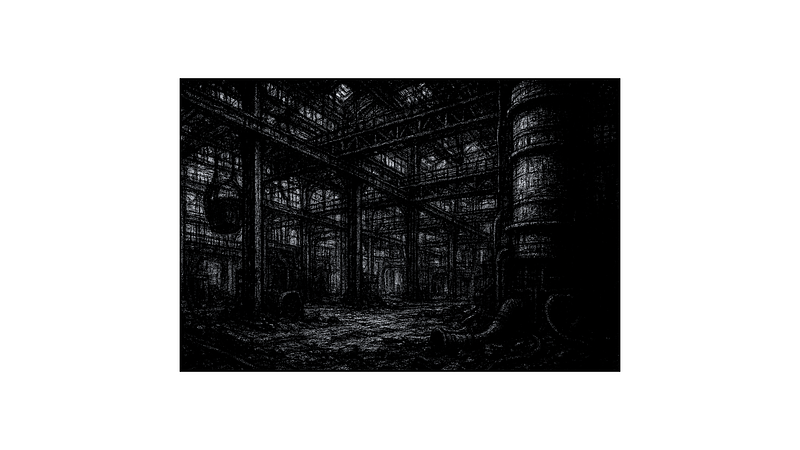
Interesting too is the contrast between the sophisticated aspect of Robocop — physical and moral too — and the absolute decay of his environment: crime-ridden downtown, closed steel mills, violence, poor TV shows as cultural standards… He is like an abnormality: an impressive technological achievement with high moral values surrounded by cynicism. In the fictional Detroit universe, Robocop is the perfect caricature of the 80s United States: big corporations, TV shows, hypocrisy, urban decay… A universe having lost any kind of moral virtue, going as far as playing “God” with a human body and mind — replaying in a dystopian environment the Resurrection mystery.
Le contraste entre l’aspect sophistiqué de Robocop — tant sur le plan physique que moral — et la décadence absolue de son environnement est également intéressant : centre-ville gangrenée par la criminalité, usines désaffectées, violence, programmes télévisés médiocres comme normes culturelles… Il apparaît comme une anomalie : une prouesse technologique impressionnante dotée de valeurs morales élevées, entourée de cynisme. Dans l’univers fictif de Detroit, Robocop est la caricature parfaite des États-Unis des années 80 : grandes entreprises, émissions de télévision, hypocrisie, décadence urbaine… Un univers qui a perdu toute vertu morale, allant jusqu’à jouer à « Dieu » avec le corps et l’esprit humains, rejouant dans un environnement dystopique le mystère de la résurrection.
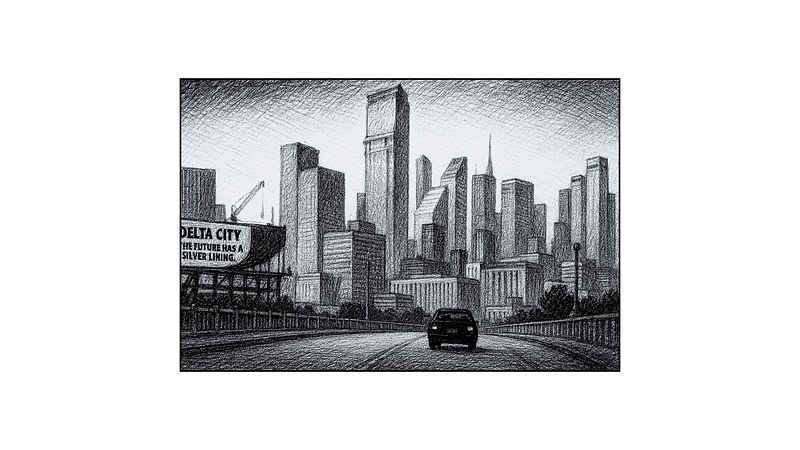
Curiously, all these themes were largely left out from the 2014 reboot — no reflections on identity, masculinity and memories. It’s a “polished” and “crystal-clear” version of the raw — and subtle — original movie. The 2014 movie is clearly a sci-fi and actions movie. The subtle references to masculinity, identity and memories were largely erased. No criticism of consumerism and economic cynicism too. Is this because of some modern taboo on these difficult and sensitive topics? Perhaps.
Curieusement, tous ces thèmes ont été largement évacués du reboot de 2014 : aucune réflexion sur l’identité, la masculinité et les souvenirs. Il s’agit d’une version « polie » et « cristalline » du film original, brut et subtil. Le film de 2014 est clairement un film de science-fiction et d’action. Les références subtiles à la masculinité, à l’identité et aux souvenirs ont été largement effacées. Il n’y a pas non plus de critique du consumérisme et du cynisme économique. Est-ce dû à un tabou moderne sur ces sujets difficiles et sensibles ? Peut-être.
 Simon CHABROL
Laisser un commentaire