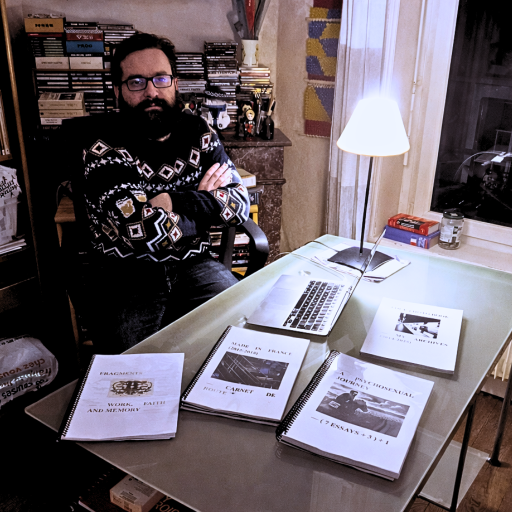
What does it mean to create a flag to symbolise a personal identity ? That’s the goal of this small paper on representation of personal identity. From “blank page” to the final flag, and in-depth exploration of personal representation of the very “self”.

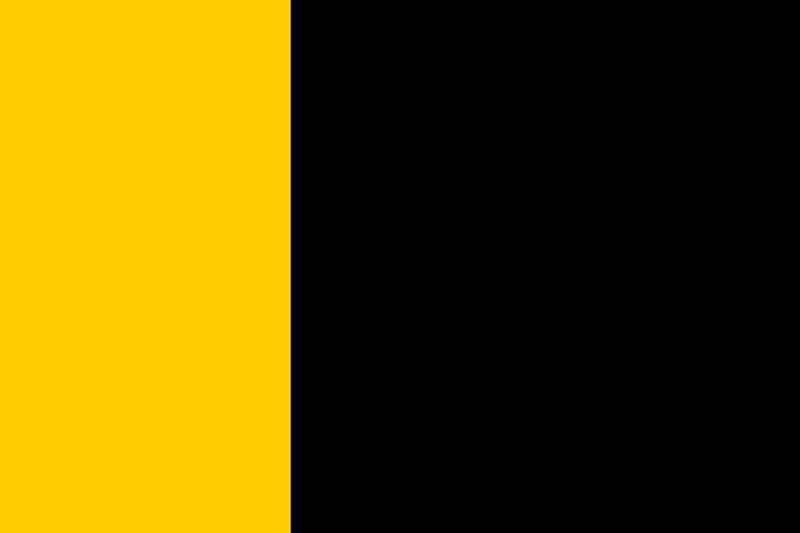
- — Yellow strip —
- — Black strip —
- — Circle Filled with Parallel Lines —
- — Radiant circle —
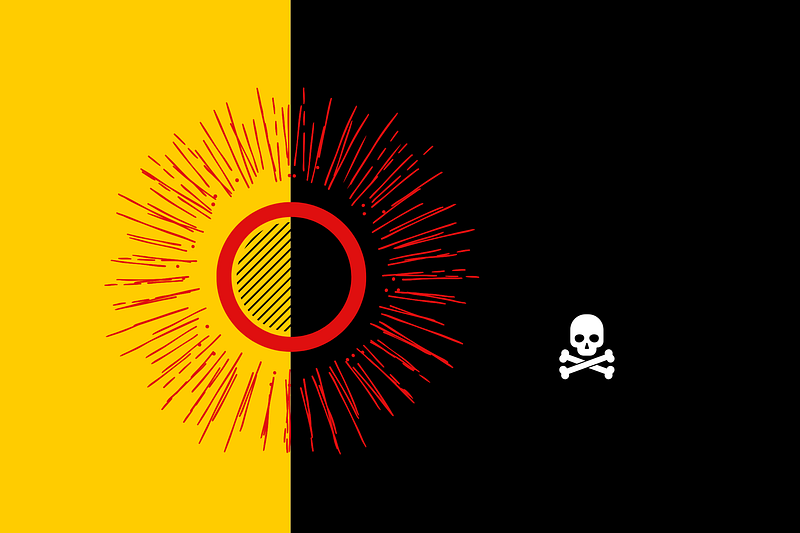
- — The Skull —
- — Interlaced Male and Female Symbols —
- — Question Mark —
- — The meaning —
— Yellow strip —
Yellow is a color that occupies a unique and complex position in the human perception of color. Situated between green and orange on the visible spectrum, it is one of the three primary colors of light (along with red and blue) and of pigment (along with red and blue in traditional color theory). Its wavelengths are among the most visible to the human eye, which is why yellow is often associated with visibility, alertness, and attention — as seen in warning signs, road markings, and hazard symbols.
Psychological and Emotional Associations
Psychologically, yellow is often regarded as the color of sunlight, warmth, and optimism. It evokes feelings of happiness, cheerfulness, and intellectual energy. In color psychology, it is associated with mental stimulation, creativity, and clarity of thought. It can encourage communication, awaken curiosity, and promote a sense of hope and positivity. However, yellow also has a dual emotional nature. While soft or golden shades can convey comfort and joy, overly bright or harsh yellows can lead to feelings of anxiety, agitation, or even irritability. This tension reflects its symbolic position between light and intensity — it can both uplift and overwhelm.
Symbolic and Artistic Dimensions
In art, yellow is one of the most expressive and luminous colors. Artists such as Vincent van Gogh used it to convey vitality, emotion, and spiritual light — consider The Sunflowers or The Yellow House. It has the ability to dominate a composition while maintaining a sense of warmth and naturalness. Symbolically, yellow represents the intellect, enlightenment, and divine illumination. In religious iconography, it is sometimes used to signify the glory of God or spiritual awakening. Yet, in other contexts, particularly when dull or faded, yellow can symbolize decay, envy, or caution.
Dual Nature and Interpretation
Ultimately, yellow is a color of contrasts — it embodies both light and fragility, joy and warning, intellect and instability. It can illuminate or disturb, inspire or unsettle, depending on its shade and context. This ambivalence is what gives yellow its enduring richness as a symbol across human history, psychology, and art.

— Black strip —
Black is one of the most powerful, complex, and symbolically rich colors in human culture. Technically, in the context of light, black is the absence of color — the complete absorption of all wavelengths. In pigment and material terms, however, black is created by combining multiple colors until they cancel one another out. This dual nature — both nothingness and totality — lies at the heart of black’s profound and often contradictory symbolism.
Psychological and Emotional Associations
Psychologically, black evokes a sense of mystery, depth, and formality, as well as power, control, and sophistication. It is a color of authority and restraint, often chosen for its ability to command respect and create a sense of seriousness. In fashion, black conveys elegance, confidence, and timelessness — a “little black dress” or a black suit communicates refinement and composure.
Yet black also carries heavier emotional associations. It is strongly linked with mourning, loss, grief, and death, particularly in Western societies, where black clothing is traditionally worn at funerals. The color’s darkness symbolizes the unknown, the hidden, and the unconscious, representing both protection and fear — a visual metaphor for the human encounter with the void.
Emotionally, black can be both comforting and intimidating: it provides a psychological barrier, a sense of privacy and security, yet it can also suggest emptiness, depression, or nihilism when used excessively or in oppressive contexts.
Symbolic and Artistic Dimensions
In art and aesthetics, black holds an unparalleled symbolic range. It has been used to denote void, silence, or infinity, and to create contrast and depth. Artists like Kazimir Malevich (Black Square, 1915) explored black as a philosophical absolute — a pure experience of being and nothingness. In contrast, Caravaggio and other Baroque painters used black dramatically in chiaroscuro to intensify emotion and direct light, giving form to the divine and the mortal alike.
Symbolically, black embodies duality — it can represent evil and good, death and rebirth, ignorance and knowledge. In religious iconography, it is sometimes associated with humility, penitence, or monastic devotion (as seen in black clerical robes). In literature and cinema, it often signals mystery, sophistication, danger, or rebellion — the color of both the villain and the antihero.
Philosophical and Existential Meaning
Philosophically, black can be interpreted as the color of the void, representing the beginning and the end, nothingness and infinite potential. It is the color of the cosmos before creation, the unknown space from which all things emerge. Many thinkers and artists have viewed black as a mirror of the human condition — the confrontation with mortality, mystery, and the limits of knowledge.
Thus, black is not merely a “dark” color — it is a symbolic field of paradox: it can be sacred or profane, beautiful or terrifying, empty or infinite. Its strength lies in this ambiguity — its ability to contain opposites and invite reflection.
— Circle Filled with Parallel Lines —
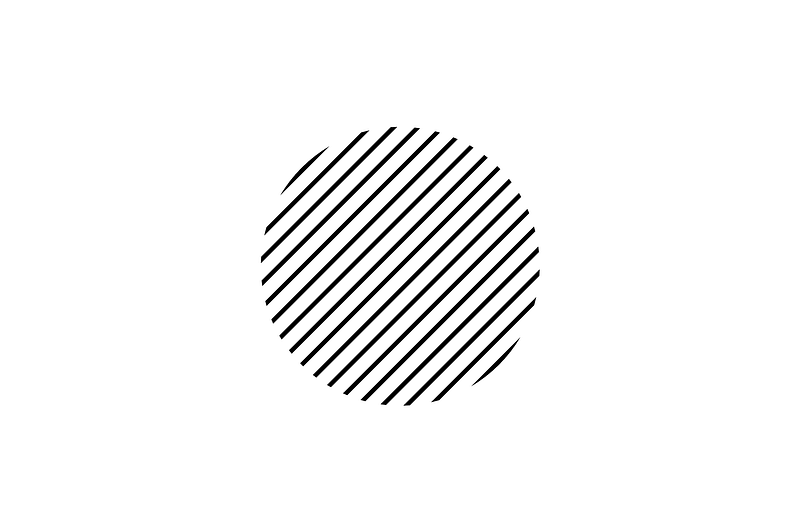
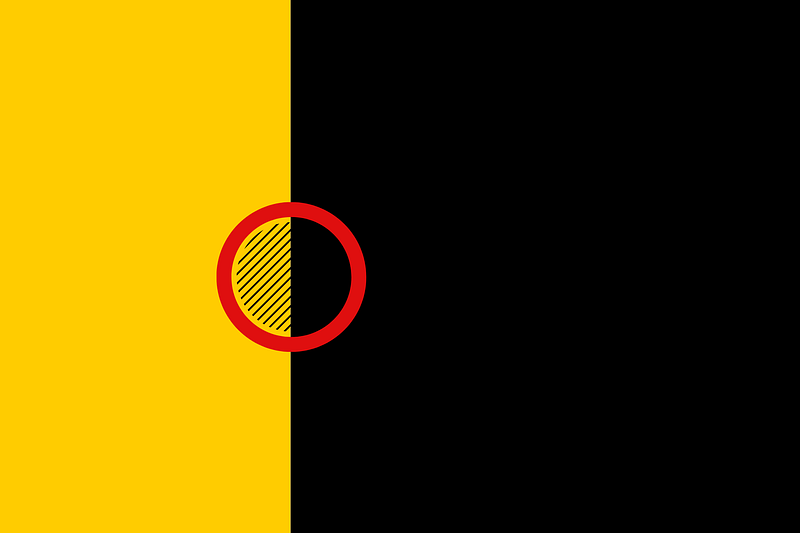
A circle with no visible boundary, filled with evenly spaced parallel lines — is a striking minimalist form that merges two fundamental visual ideas: unity and direction. It embodies a tension between wholeness and movement, containment and flow, and thus can be interpreted on several symbolic levels: geometric, psychological, spiritual, and aesthetic.
Wholeness, Totality, and Infinity
The circle has always represented unity, perfection, and eternity. It has no beginning and no end, symbolizing continuity, cycles, and the totality of existence. In most cultures, the circle stands for the cosmos, the self, the soul, or the divine — a complete and balanced whole.
But here, the circle has no contour — its boundary is only implied by the way the lines stop at its edge. This gives the shape a fascinating ambiguity: it is defined by absence, a form without border, a space suggested by rhythm rather than enclosure. Symbolically, this can mean that unity does not depend on restriction — that completeness can emerge from inner coherence rather than external limits.
Order, Direction, and Energy
Inside this circle, the parallel lines introduce movement, rhythm, and structure. They represent flow within form, discipline within freedom, or the manifestation of energy within a defined space. Lines, especially when parallel and diagonal, suggest progression, continuity, and dynamic force. They might symbolize the path of thought, the movement of time, or the unfolding of consciousness. Because they never intersect, parallel lines also evoke harmony and equilibrium — they coexist without conflict, suggesting a system in which diversity maintains order.
Boundaries and Transparency
The absence of an outline is significant. In most circular symbols, the boundary defines and contains. Here, that containment is only conceptual, not drawn. This introduces a sense of openness, permeability, and fluidity — a universe that is complete yet not confined, structured yet not closed. Philosophically, this could represent the idea of unity through transparency: identity that doesn’t rely on walls, but on inner coherence. It can also allude to modern minimalism, where essence replaces decoration — the boundary becomes unnecessary because the form’s rhythm defines it internally.
— Radiant circle —
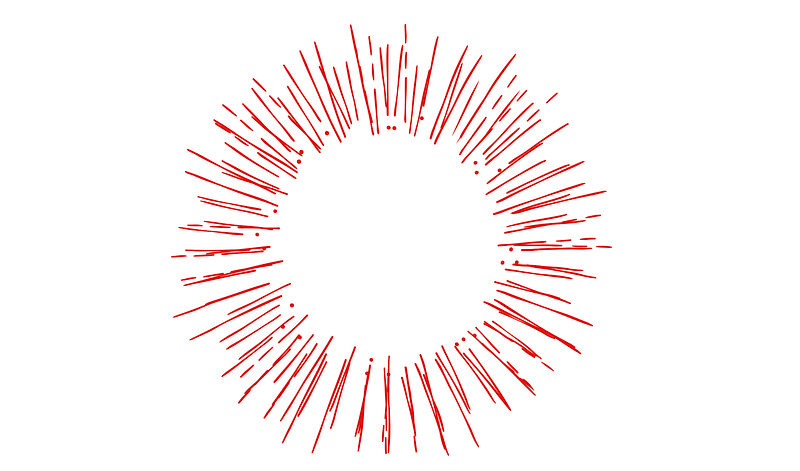
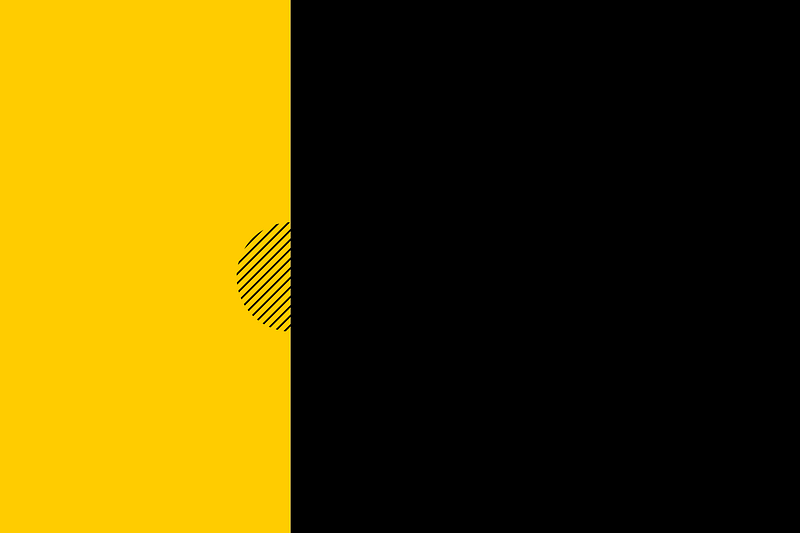
This figure — an open circle composed of red rays radiating outward from an empty center — evokes a sense of explosion, expansion, and vitality. It is a visual expression of energy in motion, life emerging from emptiness, and the dynamic relationship between center and periphery.
Origin, Silence, and Potential
At the heart of the image lies an empty space — a pure circle of nothingness. Symbolically, this void represents the source, the origin point from which all energy emanates. It is silence before sound, stillness before movement, being before manifestation. Philosophically, such a void is not “absence” but potential — the unmanifested that contains everything in latency. In Buddhist and Taoist symbolism, the empty center (like the hole in a wheel’s hub) gives meaning and function to the structure around it. Here, the emptiness is alive, not void of meaning — it’s the womb of creation, the space from which all rays (energy, thought, emotion, life) are born.
Energy, Movement, and Expansion
The radiating red lines are powerful visual metaphors for energy and vitality. They burst outward, suggesting growth, dynamism, expression, and transformation. Each line seems to move freely, irregularly — this organic irregularity implies natural motion rather than mechanical repetition. Symbolically, the rays represent:
- Life force (prana, chi) flowing outward;
- Ideas or emotions emanating from a central consciousness;
- The Sun’s energy, giving warmth and life;
- Or even human creativity — the inner fire made visible.
Their red color reinforces this meaning. Red is the color of blood, passion, strength, and vitality. It embodies heat, intensity, and immediacy — a living force that refuses to stay still. Together, these rays make the image pulse with the essence of expansion: the universe in motion, spirit becoming matter, the heart expressing its inner fire.
Red as Life and Fire
The use of red is essential to the energy of this symbol. Red is the color of blood, desire, passion, strength, and survival — the primal life force in its purest form. In many traditions, red is the color of initiation and awakening, the spark that activates transformation. Combined with the circular form, it suggests:
- The sun (source of warmth, energy, and consciousness);
- The heart (source of love and emotion);
- Or even sacred fire (symbol of purification and divine power).
Thus, the image becomes a solar mandala — a visual metaphor for life radiating from spirit.
Philosophical and Metaphysical Interpretation
From a philosophical perspective, this shape can be seen as:
- The moment of creation: energy bursting out of nothingness (the Big Bang, the cosmic breath).
- The soul expresses itself through material form.
- The historical cycle of expansion and return: all things emanate from the void, then eventually return to it.
— The Skull —
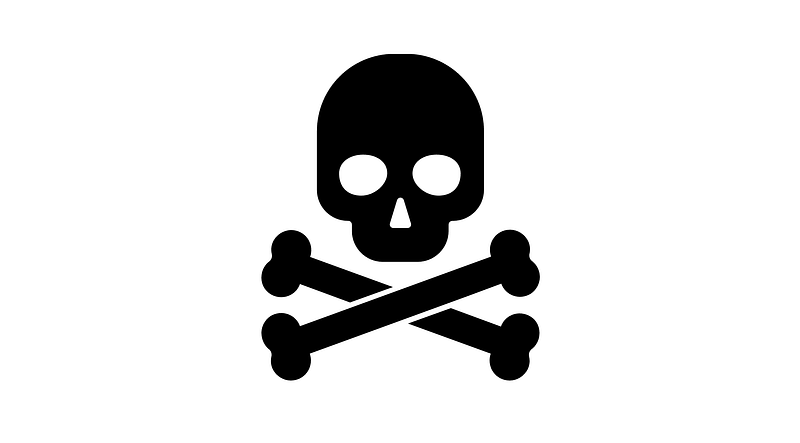
The skull and crossbones — a human skull above or in front of two crossed femur bones — embodies one of humanity’s most potent symbols. At once a warning, a memento, and a metaphysical emblem, it bridges the realms of life and death, danger and transcendence, destruction and awareness.
Origins and Historical Context
This symbol has deep historical roots. It was used:
- On pirate flags (the “Jolly Roger”) as a declaration of danger, rebellion, and mortality;
- On poison containers and toxic substances, warning of death upon contact;
In religious art and tomb iconography, especially during the Middle Ages and Renaissance, as a memento mori — a reminder that “you will die.” Its universal recognizability comes from the combination of two fundamental human symbols:
- The skull, representing death and consciousness;
- The crossed bones, symbolizing the body, mortality, and the finality of decay.
- Together, they form a visual synthesis of mortality, one that both terrifies and enlightens.
Death, Consciousness, and Transformation
The skull — the structure that once housed the brain, eyes, and mouth — is the bare essence of human identity stripped of all superficial layers. It stands for:
- Death: the inevitable conclusion of physical life;
- Survival of essence: what remains when everything transient is gone;
- Consciousness beyond form: the reminder that awareness transcends the body.
In many esoteric traditions, the skull is not a symbol of annihilation but of transformation. It marks the threshold between the physical and the spiritual, between matter and spirit, between what was and what continues. Artists and mystics have long used it to express the paradox of mortality: the emptiness of form, and the immortality of awareness that contemplates it.
The Body and the Earthly Realm
The crossed bones are equally symbolic. They form an “X”, an ancient sign of intersection, negation, and marking. In alchemical and symbolic systems, the cross represents the meeting of opposites — life and death, matter and spirit. Placed beneath the skull, they signify the mortal remains, the body returned to earth. Their crossing also implies finality and closure — a seal, an end, a line not to be crossed. Yet paradoxically, it is this crossing that gives the image structure and balance, suggesting that even death participates in the order of existence.
Warning and Wisdom
What makes the skull and crossbones powerful is its duality. It simultaneously evokes fear and awareness, danger and truth. As a warning, it commands: “Do not approach, for this is deadly.” As a philosophical emblem, it whispers: “Remember your mortality, and live with consciousness.” In medieval Christian thought, this symbol was often placed at the base of crucifixes, representing Adam’s skull — the first man, whose death was redeemed by Christ. Thus, the skull beneath the cross symbolized sin, mortality, and salvation all at once. To encounter this image, therefore, is not just to see death — it is to confront the truth of impermanence.
— Interlaced Male and Female Symbols —
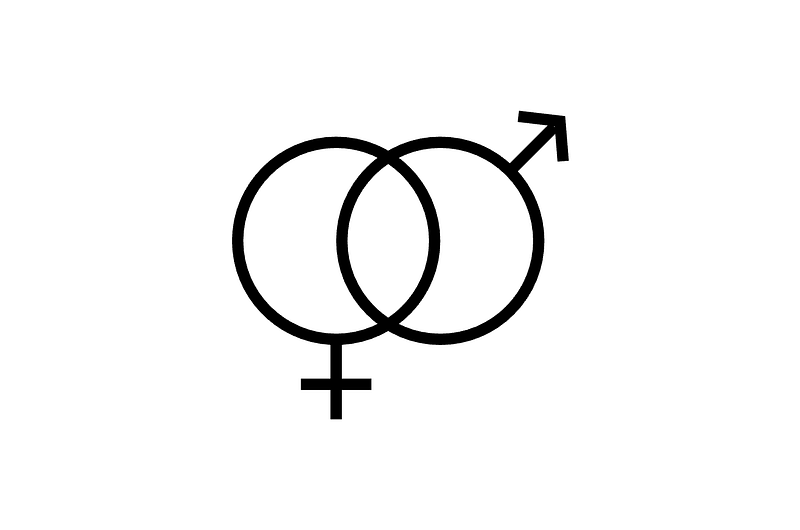
The image of two intersecting circles, marked with the signs of Mars (♂) and Venus (♀), is one of the oldest and most profound representations of duality and unity in human symbolism. It expresses the interdependence of opposites, the creative balance of forces that generate life, harmony, and transformation.
The Elements
The circle itself represents wholeness, eternity, and the totality of being. The male symbol (♂) — a circle with an arrow — derives from the shield and spear of Mars, representing action, projection, expansion, and outward energy. The female symbol (♀) — a circle with a cross — derives from the mirror of Venus, symbolizing receptivity, creation, and inward energy. When these circles overlap, they create a mandala of balance — neither dominance nor separation, but communion.
Symbolic Meaning
Union and Balance: The meeting of two complementary forces — masculine and feminine, spirit and matter, active and passive. Creation: The space of overlap symbolizes fertility, new life, synthesis, and the birth of consciousness. Harmony of Opposites: The principle that true unity includes difference, not the erasure of it.
Psychological and Spiritual Dimension
Psychologically, this symbol mirrors the integration of dual aspects of the self — the animus (masculine) and anima (feminine) within each person, as described by Jung. Spiritually, it evokes the cosmic dance of polarity that sustains the universe — yin and yang, sun and moon, heaven and earth. In essence, it is the symbol of androgyny, of wholeness regained through synthesis.
— Question Mark —
The question mark (?) is one of the most powerful symbols of the human mind’s relationship with the unknown. It represents doubt, curiosity, and the infinite search for meaning — the mark of intelligence confronting mystery.
Form and Structure
Its shape is a combination of a curve and a point:
- The curved line suggests flexibility, movement, and openness — a mind that does not walk in a straight line but explores, bends, and seeks.
- The dot anchors it, representing the moment of realization or the grounding of thought in experience.
Together, they express the cycle of inquiry: the rise of a question (the curve) and the hope of an answer (the dot).
Symbolic Meaning
Curiosity and Awareness: It embodies the essential human drive to understand, to ask “why?”. Uncertainty and Humility: It acknowledges the limits of knowledge — the fact that not all can be known. Transition: It marks a threshold between ignorance and discovery, confusion and clarity. Philosophically, the question mark is a portal — it doesn’t close a statement, it opens it. It’s a symbol of movement, not of conclusion; of thought in progress, not of fixed belief.
Psychological and Spiritual Dimension
Spiritually, it can represent the seeker’s path — the stage of questioning that precedes enlightenment. In Jungian terms, it could symbolize the emergence of consciousness from the unconscious, the moment when awareness begins to ask itself questions about its own nature. “The question is the shape of the soul seeking itself.”
— The meaning —
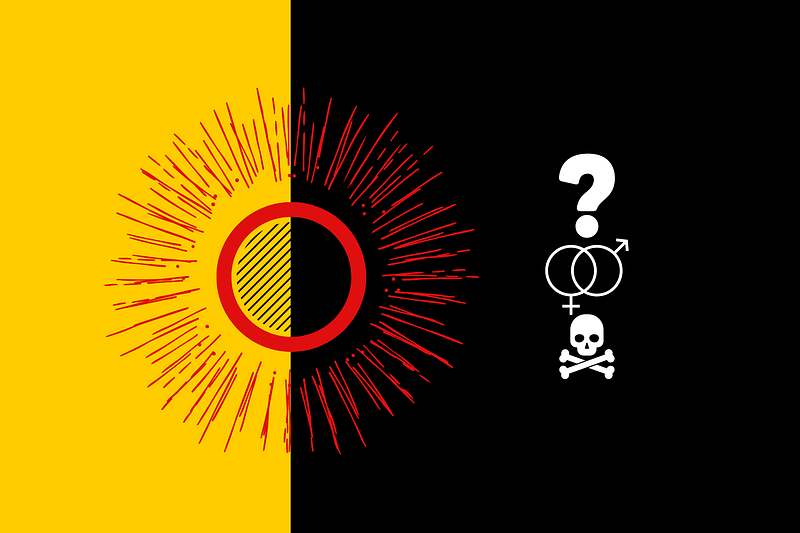
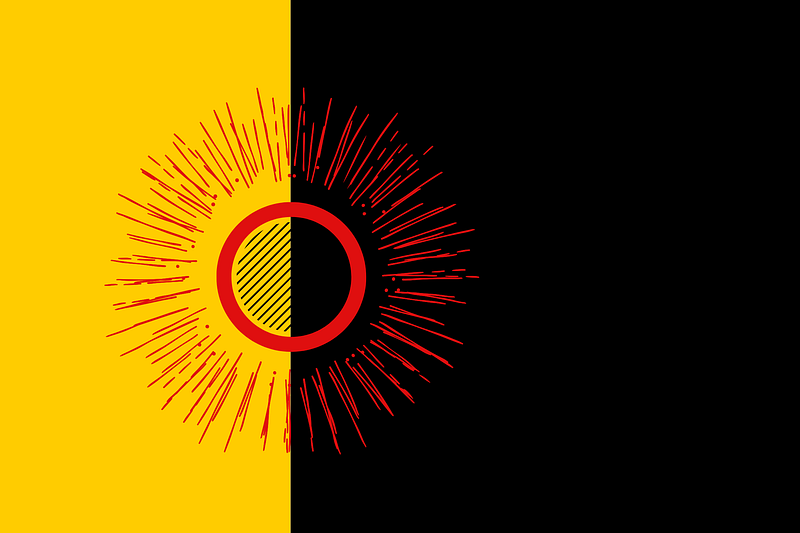
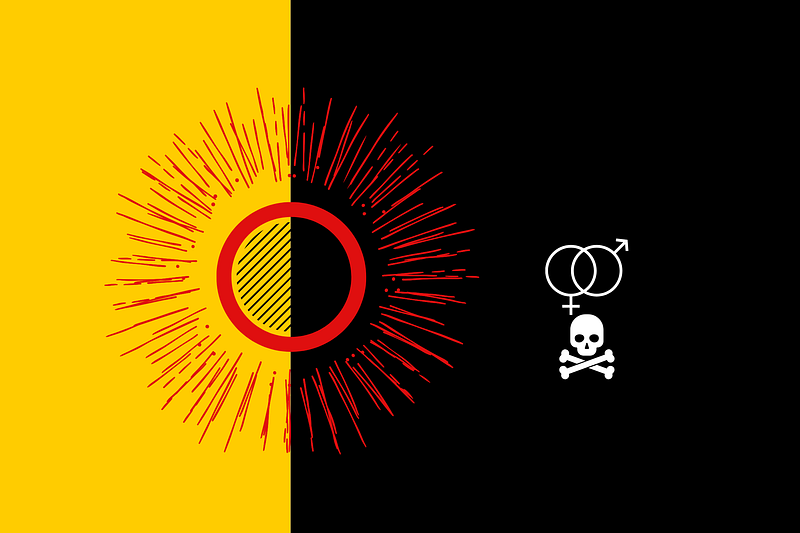
The “red outburst” on the left symbolizes several key moments where I opposed myself against several things in my personal life, especially regarding relationships and intimacy — some kind of a “birth” for myself. The “radiant circle” also echoes to me the sun or even some Van Gogh’s painting. Comically, it also echoes nuclear weapons fireball — a topic I discovered while working on nuclear warfare. Ultimately, it symbolises feelings, love, passions and struggle.
The yellow strip echoed a lot of personal things related to wheat fields. It was the “set-up” of a personal relationship nearly a decade ago. We were side by side — her and me — after a small walk, and we were watching the horizon surrounded by wheat (or perhaps barley). I rediscovered this forgotten memory fragment a few years ago when I had to work again on agriculture and wheat — and I also rediscovered the photo I took this day. We can only see the wheat field in this picture — but I can feel her presence alongside. The yellow strip is associated with resilience for me.
The black strip reminds me of a nightmare when I was a kid. My biggest fear at home was when the electricity was turned off especially when I was in the basement. Every time it occurred, I ran away as quickly as possible. The black “void” echoes to me memories of all videogames and the obsessing questions of emptiness.
The three symbols — Question mark, male-and-female symbols and the skull — can be read together, separately, top-to-bottom and bottom-to-top. My reading is the three symbols “together” with the black color : it echoes the danger of unclear relationships, permanent doubts and “voidness” feeling in social relationships.
It was inspired by a flag I made for another essay regarding the UK rural and industrial identity :
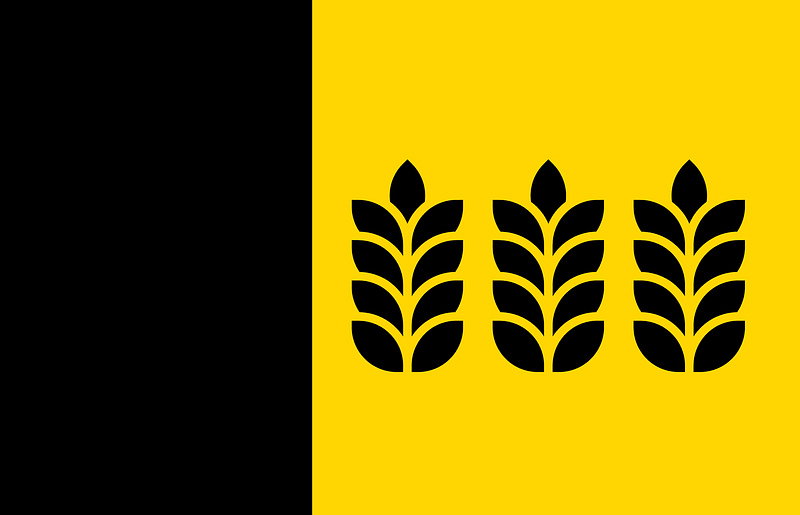
One third for the coal, two thirds for the fields. Agriculture takes precedence over industry and coal. The wheat symbol is used for being a common agricultural symbol, and reproduced three times : the sole symbol of the “past”.
 Simon CHABROL
Laisser un commentaire