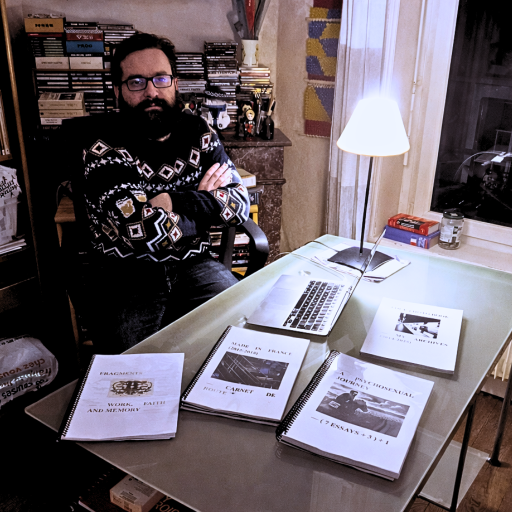

In 1991, the Soviet Union disappeared as a territorial and political entity. Founded by a revolution in 1917, it was one of the two superpowers along the United States, and the most important communist country in the world. Rich in its people, culture and diversity; the country was extremely attractive for photography enthusiasts. The country was also a little bit mysterious given the political climate until the late 1980s. Here are five books I hold in my personal collection. These books cover a period from 1971 to 2001.
Emil SCHULTHESS — “URSS le pays où le soleil ne se couche jamais” (“USSR, the country where the sun never sets.”) — 1971
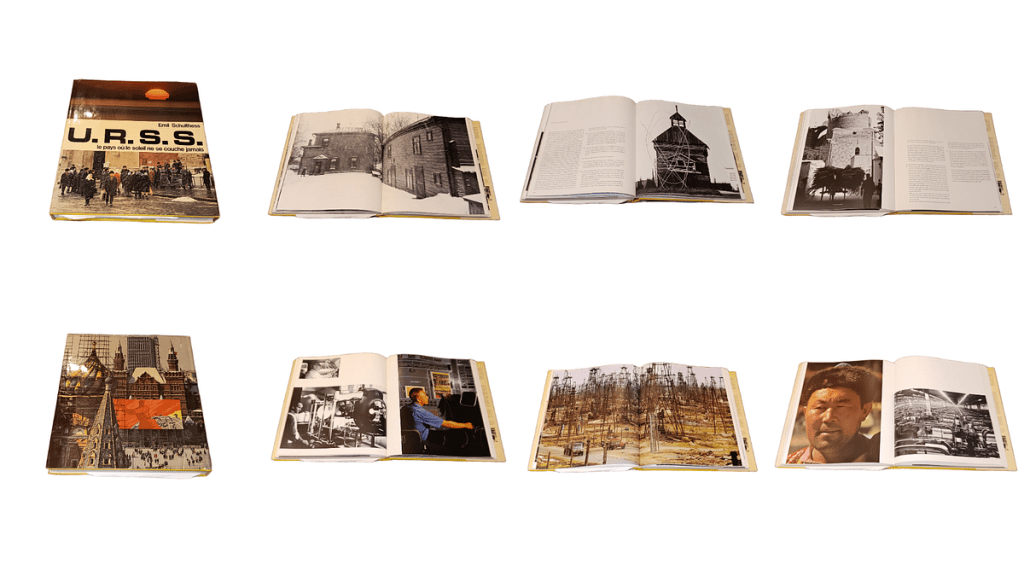
Overview — Swiss photographer Émil Schulthess’s 1971 book URSS: Le pays où le soleil ne se couche jamais (“USSR: The Country Where the Sun Never Sets”) is a richly illustrated travel and documentary work offering a panoramic view of the Soviet Union during the Brezhnev era. Combining striking photography with brief commentary, it presents the USSR as a vast, modern, and unified superstate stretching across eleven time zones.
Content — Through vivid images and text, Schulthess explores the geography, people, and industries of the Soviet Union — from Siberia’s wilderness to Moscow’s modern architecture and Central Asia’s deserts. He highlights industrial achievements, scientific progress (including the space program), and the cultural diversity of the Soviet republics. The tone is largely admiring and documentary, focusing on modernization and collective effort rather than political critique.
Themes — The book emphasizes unity in diversity, technological progress, and national pride, portraying the USSR as a civilization “where the sun never sets” — both literally and symbolically. Schulthess reflects the optimism of détente-era Western observers impressed by Soviet scale and ambition.
Soviet Union — 1971
Population — Approximately 241 million inhabitants. Urbanization was advancing rapidly, with major cities like Moscow, Leningrad, and Kiev expanding through industrial employment opportunities.
Leader(s) — Leonid Ilyich Brezhnev served as General Secretary of the Communist Party, having consolidated his power since 1964. Alexei Kosygin remained Chairman of the Council of Ministers (Premier), focusing on economic management, while Nikolai Podgorny held the largely ceremonial position of Chairman of the Presidium of the Supreme Soviet.
Major Events in the Soviet Union — 1971 marked the 24th Congress of the Communist Party of the Soviet Union (CPSU), held in March. At this congress, Brezhnev reaffirmed the principles of “developed socialism” and emphasized the continuation of the Eighth Five-Year Plan (1966–1970) into a new Ninth Five-Year Plan (1971–1975). This plan aimed to improve living standards, expand consumer goods production, and increase agricultural output.
“The Soviet War machine” (“La machine de guerre Soviétique”) — 1976
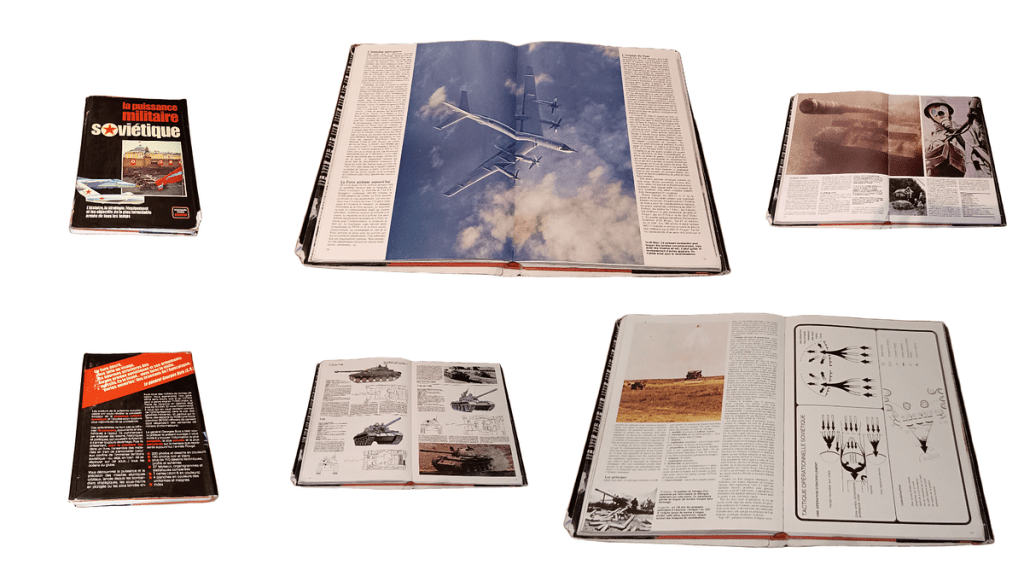
Overview — Andrew Cockburn’s The Soviet War Machine (1976) is an illustrated analysis of the military power, organization, and global ambitions of the Soviet Union during the height of the Cold War. Combining journalistic research with extensive visual material, the book examines how the USSR built and maintained one of the most formidable armed forces in history.
Content — Cockburn explores the structure and strategy of the Soviet military — the Red Army, Navy, Air Force, and nuclear arsenal — alongside the industrial and ideological systems that supported them. The book details weapon production, command organization, conscription practices, and the role of military doctrine in Soviet politics. Richly illustrated with photographs and diagrams, it depicts both the technological sophistication and the rigid discipline of the Soviet armed forces. Cockburn also assesses how the USSR projected its influence through client states, military advisers, and arms exports.
Themes — The work highlights the central role of militarization in Soviet society and the fusion of ideology and defense policy. Cockburn presents the USSR as a state driven by strategic paranoia and a determination to achieve military parity with — or superiority over — the West. The book also underscores the social cost of maintaining such vast defense capabilities amid economic constraints.
SOVIET UNION — 1976
Population — Approximately 255 million inhabitants. The population of the USSR continued its gradual increase, though growth rates were beginning to slow in the European republics while remaining higher in Central Asia and the Caucasus. Urbanization reached new heights, with over 60% of citizens living in cities.
Leader(s) — Leonid Ilyich Brezhnev remained General Secretary of the Communist Party, firmly established as the paramount leader of the Soviet Union. His rule had entered its period of full consolidation, marked by personal authority and the emergence of a loyal political elite often described as the “Brezhnev generation.” Alexei Kosygin continued as Premier, though his influence waned amid Brezhnev’s dominance. Nikolai Podgorny still held the formal post of head of state, but his political significance was minimal.
Major Events in the Soviet Union — The 25th Congress of the Communist Party of the Soviet Union took place in February 1976, serving as a reaffirmation of Brezhnev’s policies of “developed socialism.” The new Tenth Five-Year Plan (1976–1980) was announced, prioritizing improvements in consumer goods, energy efficiency, and technological modernization, though largely within the constraints of the central planning system. Economic performance was uneven: heavy industry and defense sectors continued to dominate, while agricultural inefficiencies and production shortfalls persisted.
TIME-LIFE — “Peuple et Nations — L’Union Soviétique” (“Peoples and Nations — The Soviet Union”) — 1983
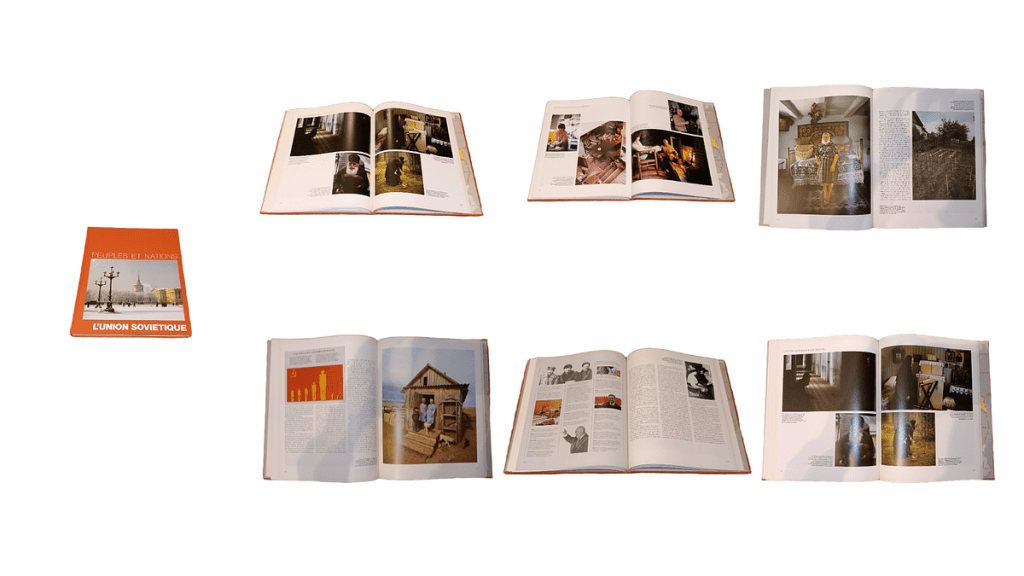
Overview — Part of Time-Life’s Peuples et Nations series, L’Union Soviétique (1983) offers a comprehensive and accessible portrait of the USSR near the end of the Brezhnev era and the beginning of the Andropov period. Blending narrative history, photography, and maps, the book provides readers with an overview of Soviet geography, history, society, and ideology as seen from a Western perspective during the late Cold War.
Content — The book traces the historical evolution of the Soviet Union — from the 1917 Revolution and Lenin’s leadership to Stalin’s industrialization and the USSR’s rise as a superpower after World War II. It examines political structures, economic planning, and daily life, showing the contrast between official propaganda and citizens’ realities. Richly illustrated, it features images of collective farms, industrial centers, and cultural life across the republics. The narrative discusses the diversity of peoples within the Union and the tensions between modernization, ideology, and tradition. It also touches on the USSR’s global role as the counterbalance to the United States in the Cold War.
Themes — The book emphasizes the complex identity of the Soviet Union — a state of immense pride and achievement but also one burdened by repression, inefficiency, and ideological rigidity. It explores the paradox between collective ideals and individual constraints, and between economic ambition and bureaucratic stagnation.
SOVIET UNION — 1983
Population — Approximately 270 million inhabitants. The USSR’s population growth rate was modest but steady, with continued demographic differences between the European and Central Asian republics. Urbanization had largely stabilized, with most of the population now living in cities. The workforce was increasingly aging, and productivity was declining, particularly in industrial sectors. Despite high literacy and broad access to education, there were growing disparities in living standards between different regions and professions.
Leader(s) — Yuri Vladimirovich Andropov served as General Secretary of the Communist Party, having succeeded Leonid Brezhnev in November 1982. Formerly the head of the KGB (1967–1982), Andropov was a disciplined, pragmatic, and reform-minded figure compared to his predecessor. He sought to revive the Soviet system through modest economic reforms and stricter labor discipline. However, his tenure was hampered by declining health, limiting the extent of his initiatives.
Major Events in the Soviet Union — Domestically, Andropov launched a series of campaigns aimed at improving labor discipline, reducing absenteeism, and combating corruption. His government tightened oversight of factories and offices, with police occasionally checking cinemas or public venues during work hours to catch truants. Economic policy focused on efficiency rather than structural reform, though limited experiments in decentralization and technological modernization were encouraged. The regime also continued to suppress dissent — the KGB maintained strong control over intellectual and activist circles, though Andropov privately acknowledged the need for renewal within the system. Despite his limited time in office, he was viewed as a serious leader attempting to restore the USSR’s vigor. Socially, citizens faced continued shortages of consumer goods, but living standards remained relatively stable.
“Une journée dans la vie de l’Union Soviétique” (“A Day in the Life of the Soviet Union”) — 1988
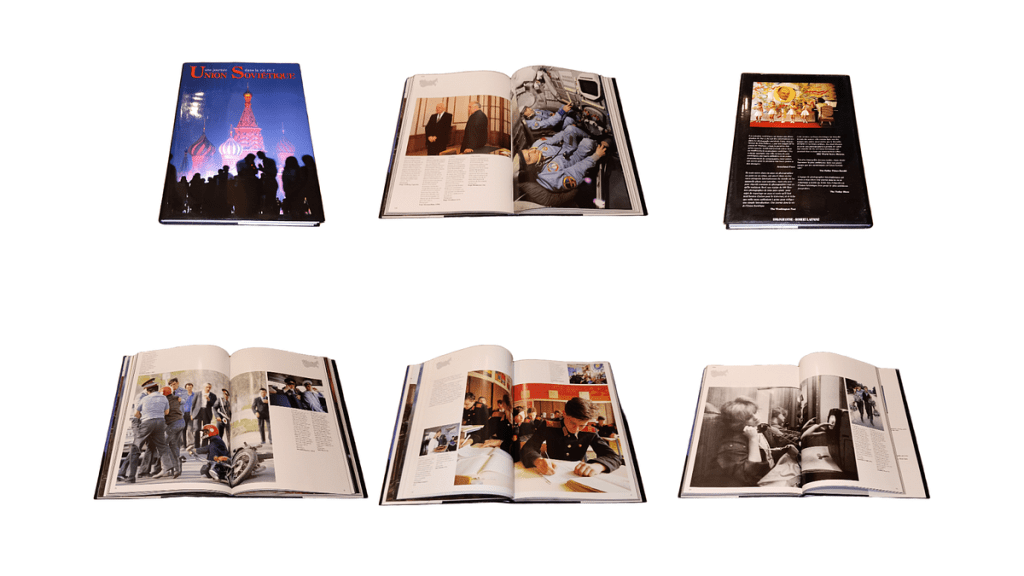
Overview — Une journée dans la vie de l’Union Soviétique (“A Day in the Life of the Soviet Union”) is a landmark photographic project first published in 1988. Conceived by American photojournalists Rick Smolan and David Cohen, it captures a single day — May 15, 1987 — across the vast territory of the USSR. The book assembles the work of over 50 international photographers, offering an unprecedented, human-centered portrait of Soviet life during the late Gorbachev era.
Content — The project documents the everyday lives of Soviet citizens, from Moscow to Vladivostok, in cities, villages, factories, schools, and homes. It features scenes of work, family, leisure, and faith, portraying miners in Donbass, students in Leningrad, shepherds in Central Asia, and artists, soldiers, and athletes from every corner of the Union. The photographs are accompanied by brief narratives and context, blending journalism and artistry. Unlike earlier depictions dominated by ideology or propaganda, this book focuses on ordinary people, showing both pride and hardship. It also captures the visible effects of Gorbachev’s perestroika and glasnost, with a freer, more open social atmosphere emerging across the country.
Themes — The book emphasizes human diversity, resilience, and the complexity of Soviet identity. It presents the USSR not as a monolithic state but as a mosaic of nations, cultures, and traditions. Themes of change, openness, and hope run throughout, reflecting the optimism and uncertainty of the late 1980s. It portrays a society beginning to rediscover its individuality after decades of political control.
SOVIET UNION — 1988
Population — Approximately 286 million inhabitants. The Soviet population continued to grow slowly, though demographic patterns were changing. Birth rates in the Slavic republics (Russia, Ukraine, Belarus) declined, while Central Asian and Caucasian republics experienced higher population growth.
Leader(s) — Mikhail Sergeyevich Gorbachev served as General Secretary of the Communist Party, a position he had held since March 1985. By 1988, Gorbachev’s reform programs — perestroika (economic restructuring) and glasnost (openness) — were reshaping Soviet society and politics. He sought to modernize the Soviet system through limited market mechanisms, decentralization, and transparency in public life. Nikolai Ryzhkov served as Premier (Chairman of the Council of Ministers), implementing Gorbachev’s economic directives. Andrei Gromyko remained Chairman of the Presidium of the Supreme Soviet until October 1988, when Gorbachev himself assumed that role, becoming head of state as well as party leader. This concentration of power symbolized both his authority and his reformist agenda.
Major Events in the Soviet Union — 1988 was a pivotal year in the transformation of the Soviet Union. Gorbachev’s perestroika reforms gained momentum, introducing elements of economic decentralization, allowing some state enterprises greater autonomy and legalizing limited forms of private business (cooperatives). Glasnost encouraged public discussion of previously taboo topics, including Stalinist repression, environmental degradation, and social problems. Political pluralism began to emerge within the Communist Party, leading to the erosion of the traditional monopoly of power. The 19th Party Conference (June–July 1988) became a landmark event: delegates debated democratization, separation of party and state functions, and the creation of a new Congress of People’s Deputies to be elected in 1989. In the Baltic republics, nationalist movements intensified — notably Sąjūdis in Lithuania, the Popular Front of Latvia, and the Estonian Popular Front — demanding greater autonomy and openly challenging Moscow’s authority. These developments reflected the growing fragmentation of the Soviet political order.
Fen MONTAIGNE & Gerd LUDWIG — “Broken Empire” (“L’empire brisé”) — 2001
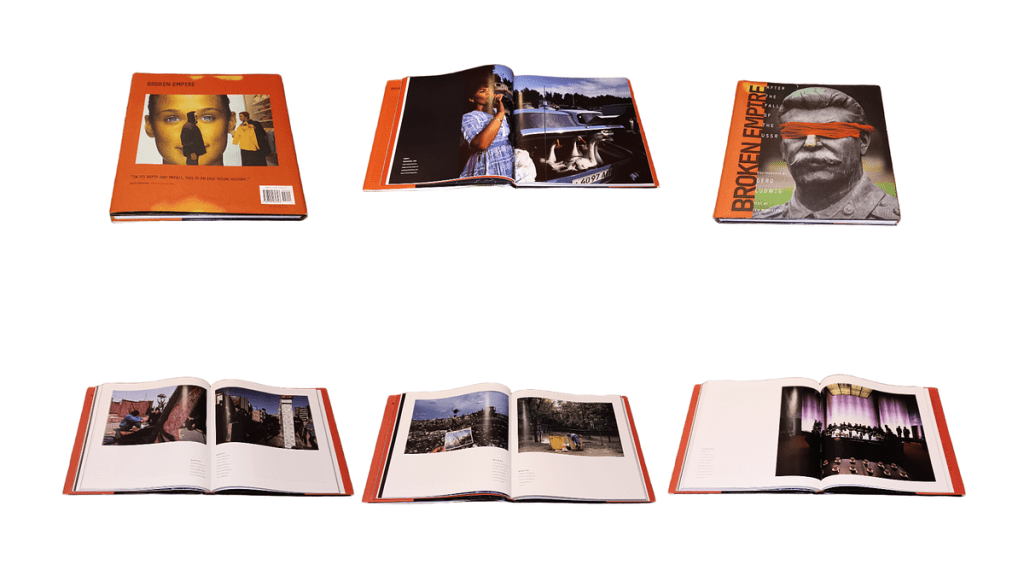
Overview — Broken Empire (French title: L’Empire brisé) is a powerful photojournalistic chronicle of the former Soviet Union a decade after its collapse. Written by Fen Montaigne, an American journalist, with photography by Gerd Ludwig, a renowned National Geographic photographer, the book documents the human, social, and environmental aftermath of the Soviet Union’s disintegration. Published in 2001, it provides an unflinching portrait of the new realities faced by people across Russia and the other former Soviet republics.
Content — Through a combination of narrative reportage and striking photography, Broken Empire explores the lives of ordinary citizens coping with the upheaval of post-Soviet transition. It depicts economic chaos, political corruption, environmental devastation, and social decay, contrasting them with moments of resilience and renewal. Ludwig’s photographs capture haunting scenes — abandoned industrial towns, polluted landscapes, decaying Soviet-era infrastructure, and the hardship of everyday life in the 1990s. Montaigne’s text provides historical context, interviews, and analysis of how the collapse of communism reshaped the region’s identity. The coverage spans Russia, Ukraine, the Caucasus, and Central Asia, highlighting both the shared legacy of the USSR and the diverging paths of its successor states.
Themes — The central theme is the human cost of empire and transition. The authors portray a society struggling between the remnants of totalitarian control and the uncertainties of capitalism and democracy. Key motifs include loss and disillusionment, environmental neglect, national rebirth, and the search for identity in a post-imperial world. The tone is empathetic but unsparing — celebrating endurance while exposing the deep scars left by decades of authoritarian rule and economic collapse.
RUSSIA — 2001
Population — Approximately 145 million inhabitants. The population of the Russian Federation was in decline due to low birth rates, high mortality (especially among working-age men), and emigration following the turbulent post-Soviet decade. The demographic crisis of the 1990s continued, with a shrinking labor force and a falling life expectancy (around 65 years). Urban areas remained dominant, with Moscow and St. Petersburg emerging as the country’s economic and cultural hubs, while rural regions suffered from depopulation and economic stagnation.
Leader(s) — Vladimir Vladimirovich Putin served as President of the Russian Federation, having succeeded Boris Yeltsin at the end of 1999 and been formally elected in March 2000. Mikhail Kasyanov held the post of Prime Minister, managing economic policy under Putin’s direction. Putin’s early presidency focused on restoring state authority, centralizing power, and reasserting Russia’s role on the world stage. His leadership style contrasted with Yeltsin’s chaotic and often improvisational governance — Putin emphasized discipline, stability, and national strength.
Major Events in Russia — In 2001, Russia was in the midst of economic recovery after the financial collapse of 1998. Rising global oil prices significantly boosted state revenues, allowing for gradual growth and renewed confidence. Putin’s administration launched administrative reforms to tighten federal control over the regions through the creation of seven federal districts, each headed by a presidential envoy. The government also targeted the powerful oligarchs who had dominated politics and the economy in the 1990s — most notably Boris Berezovsky and Vladimir Gusinsky, both of whom fled abroad amid criminal investigations. The Kursk submarine disaster of August 2000 continued to shape public perceptions of Putin’s leadership; by 2001, he was consolidating his reputation as a decisive, pragmatic ruler, though one increasingly intolerant of dissent. The war in Chechnya persisted, though the Kremlin claimed major victories and began integrating pro-Moscow Chechen leaders into local governance structures. Domestically, censorship increased subtly through state influence over major television networks, marking the beginning of tighter media control.
 Simon CHABROL
Laisser un commentaire