The Protectorate — A political anomaly ?
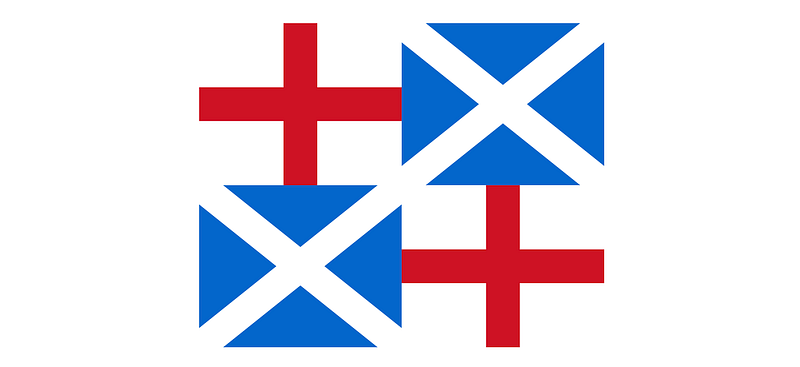
It is rarely discussed that the United Kingdom was not a monarchy for several years from 1653 to 1659. The country was led by a military figure in the person of Oliver Cromwell then his son Richard Cromwell, until the restoration of the monarchy in 1660.

While not directly tied to modern Republicanism in the United Kingdom, the fact remains that Oliver Cromwell overthrew the monarchy and King Charles I following the English Civil War (1642–1651). In political terms, republicanism refers to the opposition to monarchism in the United Kingdom to replace royal Parliamentarism by a republic. This controversial topic is considered an offence in the United Kingdom under the Treason Felony Act (1848).
Parliamentarism and the English Civil Wars
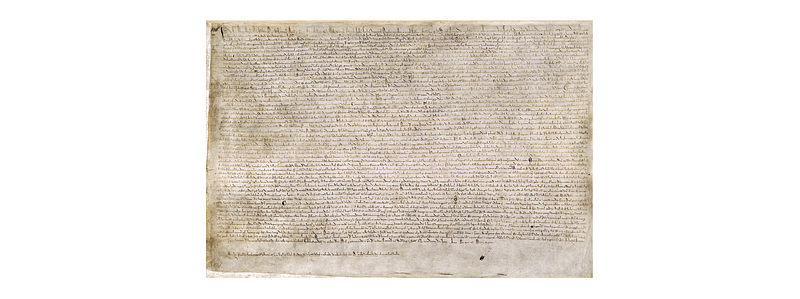
During the 13th–15th centuries, the British political framework became progressively structured around the monarchy and what would become the modern British Parliament. The Magna Carta signed in 1215 — even if suspended and re-activated several times — bound the power of the king regarding privileges of church and cities. In 1265, Simon de Montfort 6th Earl of Leicester — not to be mistaken with the French crusader Simon de Montfort — set up the Simon de Montfort’s Parliament. It was short lived but it allowed the representation of city and county representatives. In 1295, King Edward I established the Model Parliament — the basis of the modern British Parliamentary and political framework.
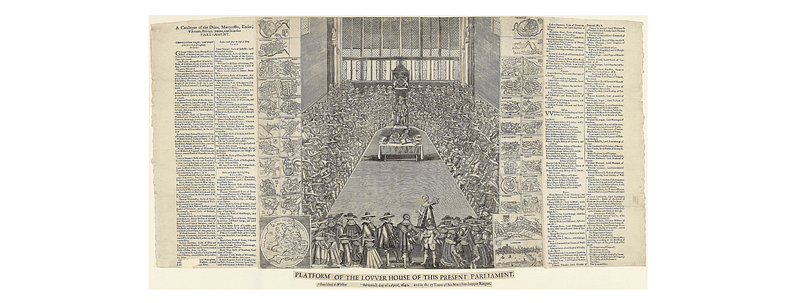
It was a bit like the parliaments in other European countries : the political weight of the Parliamentarians was limited and the goal of this assembly was to assist the King to levy taxes. The successor of this Parliament, in place during the English Civil War, was the Long Parliament from 1640 to 1660. The history of this Parliament was troubled with several secessions between the Parliamentarians themselves as with the Rump Parliament from 1648 to 1653.

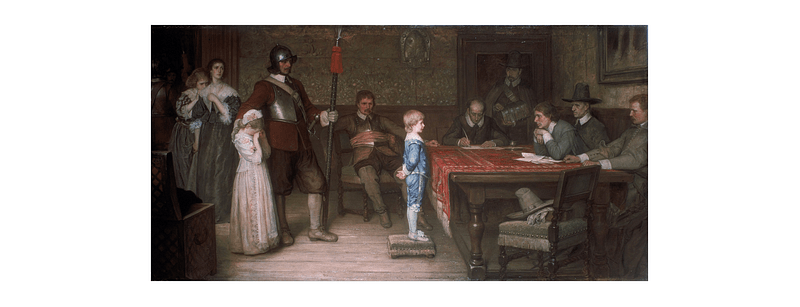
The English Civil Wars were deeply traumatizing for the country. Several episodes occurred from 1642 to 1651 — the first one from 1642 to 1646, the second one from 1648 to 1649 and the third one from 1649 to 1651. This painting is a good illustration of the complexity and hardship faced by people and institutions during this time — children in front of a court during the English Civil Wars :
Cromwell’s figure emerged in this troubled context. Before his rule over England, Oliver Cromwell (1599–1658) was a relatively obscure country gentleman from Huntingdon, Cambridgeshire. Educated at Sidney Sussex College, Cambridge, he initially pursued a modest life as a farmer and Member of Parliament. Deeply influenced by Puritan religious beliefs, Cromwell became a fervent opponent of the perceived corruption and absolutism of King Charles I. When civil war broke out in 1642 between the King and Parliament, Cromwell quickly emerged as a skilled and disciplined military leader. His leadership of the Parliamentarian cavalry — the “Ironsides” — proved decisive in several key victories, most notably at Marston Moor (1644) and Naseby (1645). By the late 1640s, Cromwell had become one of the most powerful figures in the army and a central force in the political upheaval that would eventually lead to the trial and execution of Charles I and the establishment of the English Commonwealth.
Establishment of the Protectorate
Following the English Civil Wars, the Barbone’s Parliament was established in 1653 as a temporary legal framework. Then the Commonwealth of England, Scotland and Ireland was established on 16 December 1653 — called the Protectorate. At this time, in 1649, England, Ireland and later Scotland was governed as a republic by the Council of State — appointed by the Rump Parliament established after the execution of King Charles I. Oliver Cromwell became the Lord Protector of the Commonwealth of England. Cromwell established the First Directorate Parliament in 1654 to 1655. The next two ones were established from 1656 to 1658, then 1658 to 1659. A constitution was established under the name “Instrument of Government” on 16 December 1653. The country was divided into several military zones as illustrated with this map — a period called the “Rule of Major-Generals” from 1655 to 1657.

Eleven military districts were created to control the country. England was profoundly changed during the Protectorate era. The House of Lords was abolished in February 1649. In March 1649, the act abolishing the Kingly Office formally disbanded the monarchy. The Act for subscribing the Engagement was passed in January 1650 introducing the oath “I do declare and promise, that I will be true and faithful to the Commonwealth of England, as it is now established, without a King or House of Lords.” — a clear stance against monarchy and nobility.
Republicanism or “Authoritarian virtue” ?
What is sometimes considered the only republican experience of the United Kingdom was not exactly a Republic in the modern democratic sense. Cromwell’s regime was authoritarian. The Parliament was dissolved several times. As a French person, the Cromwell Protectorate reminds me of the “Directory of the First French Republic” during the Revolutionary Wars in France or the “Committee of Public Safety” — England even got its own committee during the English Civil Wars. While avoiding a dramatic comparison, there is something interesting between Cromwell and the French revolutionary leader Robespierre. Despite their ideal, both figures were extremely authoritarian. Robespierre was credited for the “Reign of Terror” and the death of Louis XVI. Robespierre’s context was specific to Revolutionary France but several things are blatant : free speech control, militarisation, arbitrary trials… But the regime acted under the pretense of “virtue” — some kind of a new religion for Robespierre.

Cromwell’s reign was authoritarian too. While his regime had nothing to do with a “Reign of Terror” — such a comparison an historical and political non-sense — the Protectorate was heavily militarized (as far as creating military regions). Cromwell was also interested in public morality and especially in religious puritanism. Plays were banned in London in 1642. Several acts were passed to suppress immorality in England : “Adultery Act” (1650), “Blasphemy Act (1650)”, “Profane Swearing Act (1650)”, “Sabbath Observance Act (1650)”… The “Licensing Act” was introduced to control the press. Regarding religious affairs, the “Toleration Ordinance” adopted in 1654 extended religious freedom of conscience for all Protestants denominations but excluded Catholics and Royalists Anglicans. The only act of tolerance during Cromwell’s reign was the readmission of the Jews in 1656 — Jews were originally expelled from England in 1290. Politically, Cromwell made sure to never look like another King — the “Humble Petition and Advice” (1657) proposed Cromwell as a new King, a proposition refused by Cromwell who chose to become the Lord Protector.
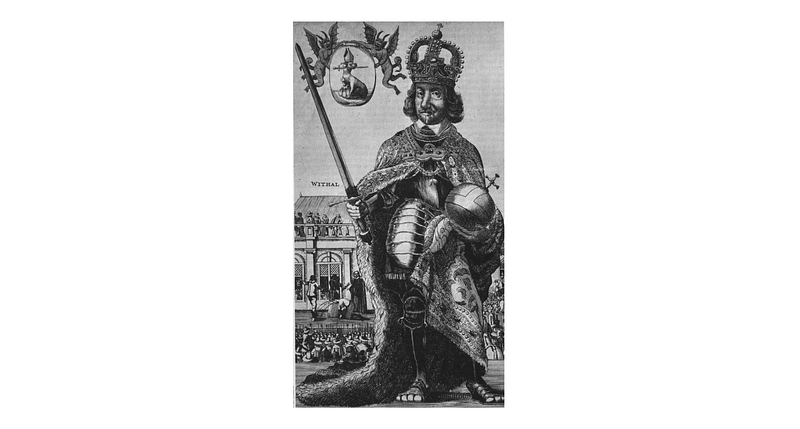
Despite being officially a republic, the fact remains that the Protectorate was in fact authoritarian and even extremely conservative on religious and freedom questions. That’s the reason why the comparison between Cromwell’s regime and Robespierre’s “virtue” political ideal is not absurd — but that’s the limit of the comparison. The main common strait being the beheading of the king : Louis XVI in France and Charles I in England. It’s not incorrect to describe today the Protectorate as a Puritan regime — a similar example could be the Republic of Geneva under the leadership of the French Protestant reformer Jean Calvin from 1536 to 1564. From an economic perspective, the Protectorate did not implement as many measures as what was done regarding religious and moral affairs. The “Navigation Act” (1651) was probably the only major economic act of the Protectorate. Authoritarianism was expressed within the Protectorate. Cromwell succeeded in the conquest of Scotland integrated into the Commonwealth in 1651. Ireland was kept under military control in 1649 after a major uprising.
Downfall and conclusions
Oliver Cromwell died on 3 September 1658 after suffering from a long disease. His son Richard took over the title of Lord Protector. After nearly five years of military regime, the question arose of moving to a civilian political structure. But under political struggle, officers asked in April 1659 for the dissolution of the Parliament. Richard accepts the offer and the Parliament is dissolved, leading in turn to the recall of the Rump Parliament. A general — George Monck — finally put an end to the political struggle and the monarchy was restored — first with the recreation of the Long Parliament as it was in 1649. In a shocking move, the new king Charles II — son of Charles I — decided to posthumously execute Oliver Cromwell. His body was exhumed from Westminster Abbey and publicly desecrated on 31 January 1661. As a French person, I can’t help but think of what was done by the French revolutionaries : the desecration of the tombs of the Basilica of Saint-Denis in 1794.

With the reestablishment of the monarchy, the Protectorate looks like a political enigma in British history. A decade out of nearly millennia of royalty/monarchy. Cromwell’s reign can’t even be considered true “republicanism” as the regime was authoritarian and puritan. In the short time, the political heritage disappeared with the death of Oliver Cromwell. But in the long term, Cromwell’s reign had a lasting impact especially for the role of the Parliament. The Kingdom became a Parliamentary monarchy during the “Glorious Revolution” with the creation of the Bill of Rights during the years 1688–1689. On the cultural legacy, it’s still worth mentioning the “Cromwell” movie from 1970 — critizised for several historical inaccuracies but worth watching for acting.
 Simon CHABROL
Laisser un commentaire