
n. an approach to the mind, personality, psychological disorders, and psychological treatment originally developed by Sigmund Freud at the beginning of the 20th century. The hallmark of psychoanalysis is the assumption that much mental activity is unconscious and that understanding people requires interpreting the unconscious meaning underlying their overt, or manifest, behavior. — APA Dictionary of Psychology
n. Approche de l’esprit, de la personnalité, des troubles psychologiques et du traitement psychologique initialement développée par Sigmund Freud au début du XXe siècle. La psychanalyse se caractérise par l’hypothèse selon laquelle une grande partie de l’activité mentale est inconsciente et que pour comprendre les gens, il faut interpréter la signification inconsciente qui sous-tend leur comportement apparent ou manifeste. — APA Dictionary of Psychology
Psychoanalysis was founded by Sigmund Freud as part of a new framework to understand and treat mental disorders at a time where no medication and few theories were available to assist these people. The theory was revolutionary because it insists that much of the disorders are caused by unconscious underlying causes — something that departs from past theories where mental disorders were seen as defects and diseases treated with harsh treatments and few to no times given for the patients to express themselves. The goal of this small essay is to put in action the psychoanalysis framework by using a fictional material.
La psychanalyse a été fondée par Sigmund Freud dans le cadre d’un nouveau dispositif visant à comprendre et à traiter les troubles mentaux à une époque où aucun médicament et peu de théories étaient disponibles pour aider ces personnes. Cette théorie était révolutionnaire, car elle insistait sur le fait que la plupart des troubles étaient causés par des causes inconscientes sous-jacentes, ce qui s’éloignait des théories antérieures selon lesquelles les troubles mentaux étaient considérés comme des défauts et des maladies traités par des traitements sévères, sans laisser ou presque aux patients la possibilité de s’exprimer. L’objectif de ce petit essai est de mettre en pratique le cadre de la psychanalyse à l’aide d’un matériel fictif.
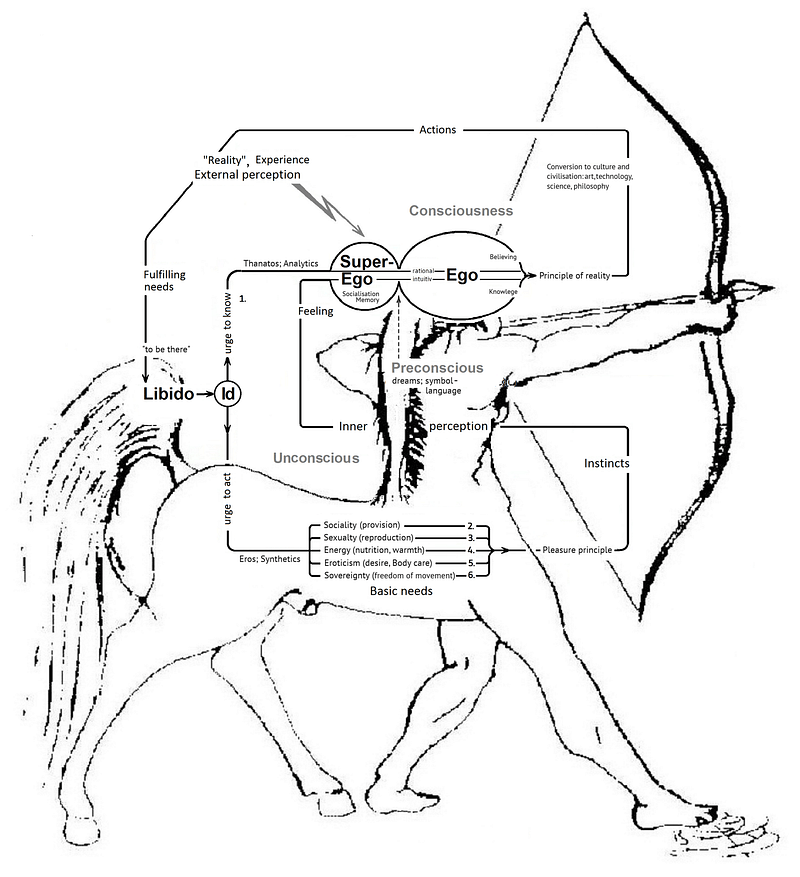
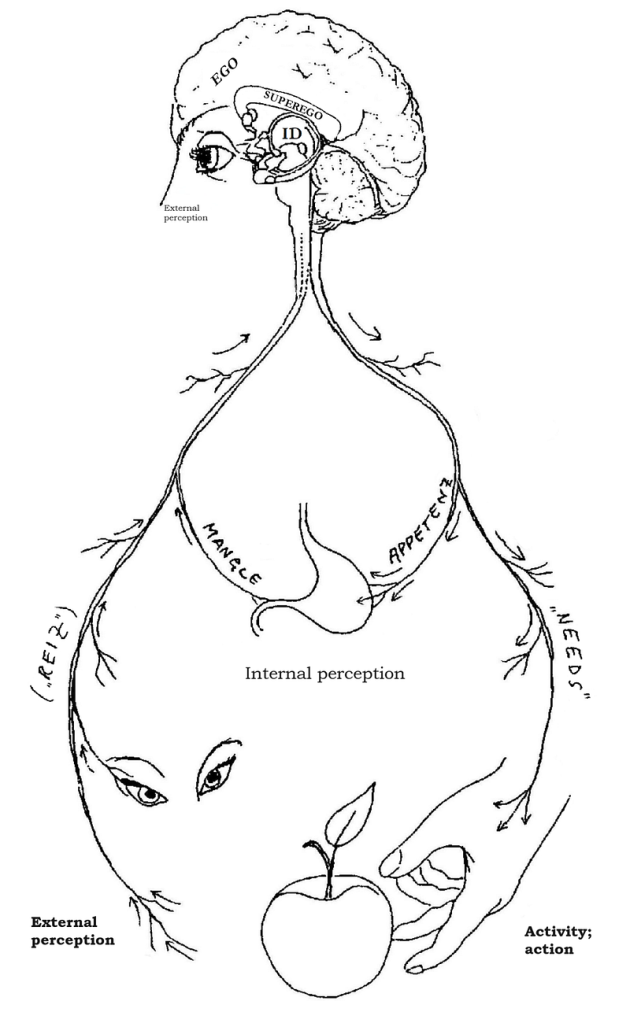
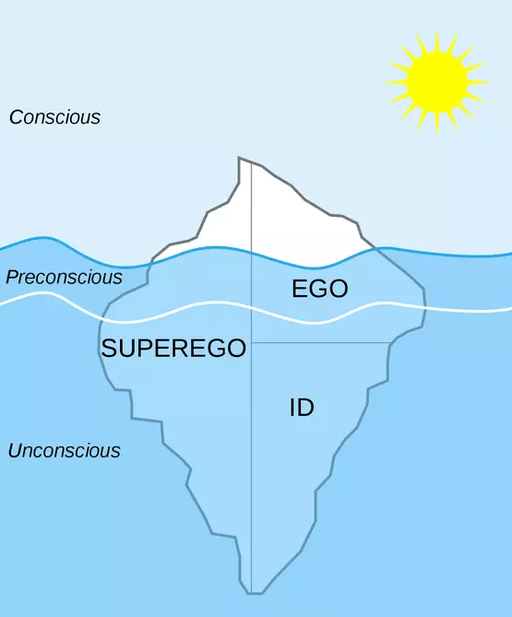
When we work on something introspective, we are generally able to speak and write of everything. But what matters the most in the case of psychoanalysis is to access the unconscious underlying things that could explain why we acted this way, or why the event matters this way. The topic is a bit different from trauma-related amnesia. The memory is not necessarily buried in the case of psychoanalysis — but the underlying meaning or force is.
Lorsque nous travaillons sur quelque chose d’introspectif, nous sommes généralement capables de parler et d’écrire sur tout. Mais ce qui importe le plus dans le cas de la psychanalyse, c’est d’accéder à l’inconscient sous-jacent qui pourrait expliquer pourquoi nous avons agi de cette manière, ou pourquoi l’événement a cette importance. Le sujet est un peu différent de l’amnésie liée à un traumatisme. Dans le cas de la psychanalyse, le souvenir n’est pas nécessairement enfoui, mais sa signification ou sa force sous-jacente l’est.

To discover the topic I will dig into a fictional example inspired from real-life experience to understand the whole process is “extracting” what lies beneath the surface. The psychoanalytic concepts are introduced and used in a simple way for the exercise. The reader will excuse me for the lack of formalism — the goal is to use and demonstrate them in a simple and understandable way, not a clinical one.
Pour aborder ce sujet, je vais m’appuyer sur un exemple fictif inspiré d’une expérience réelle afin de comprendre que tout le processus consiste à « extraire » ce qui se cache sous la surface. Les concepts psychanalytiques sont présentés et utilisés de manière simple pour cet exercice. Le lecteur m’excusera pour le manque de formalisme : l’objectif est de les utiliser et de les démontrer de manière simple et compréhensible, et non de manière clinique.
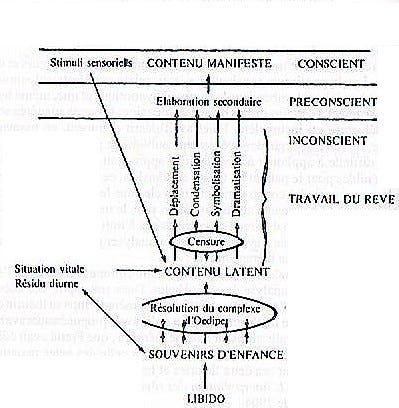
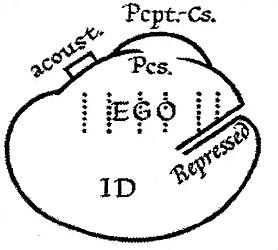
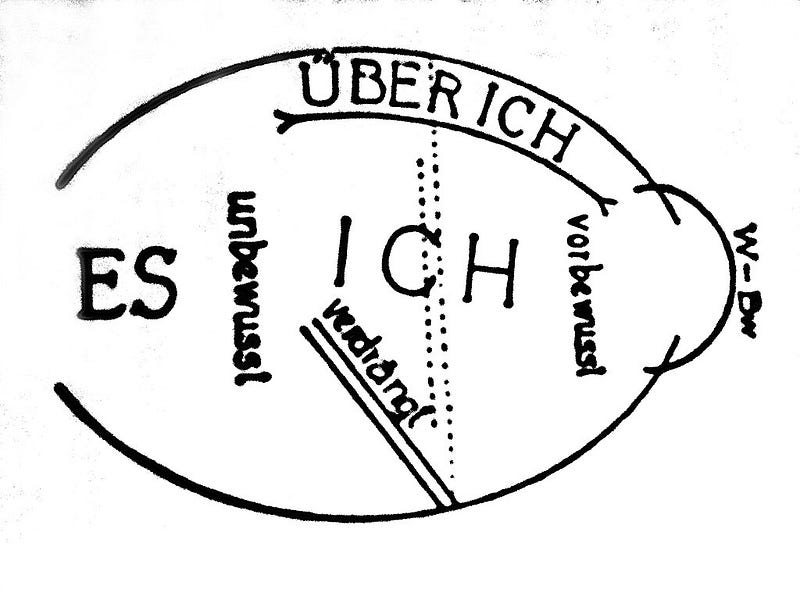
Repressed material
The return of repressed material is a concept in psychoanalysis, introduced by Sigmund Freud, referring to the resurfacing of thoughts, feelings, desires, or memories that were previously pushed out of conscious awareness. These repressed elements do not disappear; instead, they continue to influence behavior and mental life from the unconscious. They rarely return in their original form, often emerging disguised through symptoms such as anxiety, phobias, or psychosomatic complaints, in dreams, in lapses of speech, or in repetitive actions. Repression originally serves to protect the conscious mind from painful or socially unacceptable impulses, but the energy of these impulses persists, seeking expression. Recognizing the return of repressed material is central in psychoanalytic therapy, as it allows hidden conflicts to be brought into consciousness and addressed.
Le retour du refoulé est un concept de la psychanalyse, introduit par Sigmund Freud, qui fait référence à la réapparition de pensées, de sentiments, de désirs ou de souvenirs qui avaient été précédemment refoulés de la conscience. Ces éléments refoulés ne disparaissent pas ; au contraire, ils continuent d’influencer le comportement et la vie mentale depuis l’inconscient. Ils reviennent rarement sous leur forme originale, émergeant souvent sous une forme déguisée à travers des symptômes tels que l’anxiété, les phobies ou les troubles psychosomatiques, dans les rêves, dans les lapsus ou dans des actions répétitives. Le refoulement sert à l’origine à protéger l’esprit conscient contre des pulsions douloureuses ou socialement inacceptables, mais l’énergie de ces pulsions persiste, cherchant à s’exprimer. Reconnaître le retour du matériel refoulé est essentiel dans la thérapie psychanalytique, car cela permet de faire remonter à la conscience les conflits cachés et de les traiter.
When a troubled relationship between a young man and a young woman led the young man, jokingly, to recode the relationship as an agricultural matter.
Our patient was working heavily on agriculture in an unknown year. He was puzzled by the wheat field of a country. He invested a lot of time in agricultural statistics and labor methods related to this crop. He was so proud of his work that he bought a bunch of wheat in his desks and a poster of a combine harvester. He liked to walk in the countryside in the past, but had no passion for agriculture.
Lorsqu’une relation difficile entre un jeune homme et une jeune femme a conduit le jeune homme, sur le ton de la plaisanterie, à recoder cette relation comme une question agricole.
Notre patient travaillait dur dans l’agriculture à une date inconnue. Il était intrigué par les champs de blé d’un pays. Il a consacré beaucoup de temps aux statistiques agricoles et aux méthodes de travail liées à cette culture. Il était si fier de son travail qu’il a acheté un bouquet de blé pour décorer son bureau et une affiche représentant une moissonneuse-batteuse. Il aimait se promener dans la campagne autrefois, mais n’avait aucune passion pour l’agriculture.
What the patient is feeling is the “return of repressed material” — this is clear for him that his work on agriculture and wheat is far from being simply a professional task or even something rewarding. He knows that buying a poster of a combine harvester and a bunch of wheat is a bit “too much” but he can’t explain that in a clear way. This sudden passion combined with heavy workload and aestheticisation is a clear sign that something is going back to the “surface”.
Ce que ressent le patient, c’est le « retour du refoulé » : il est clair pour lui que son travail dans l’agriculture et le blé est loin d’être simplement une tâche professionnelle ou même quelque chose de gratifiant. Il sait qu’acheter une affiche représentant une moissonneuse-batteuse et un bouquet de blé est un peu « exagéré », mais il ne parvient pas à l’expliquer clairement. Cette passion soudaine, combinée à une charge de travail importante et à une esthétisation, est un signe évident que quelque chose refait surface.
Breakthrough
The breakthrough of the unconscious refers to the moment when unconscious thoughts, feelings, or memories, which have been repressed or kept out of awareness, suddenly emerge into consciousness. Unlike the more gradual or disguised manifestations seen in the “return of the repressed,” a breakthrough can be intense, sudden, and difficult to ignore. It may appear as a powerful emotional reaction, a vivid memory, a strong impulse, or a sudden insight, often disrupting the person’s current mental or emotional state. In psychoanalytic terms, this event highlights the persistent influence of the unconscious on behavior and experience, showing that repressed material can resurface with considerable force when defenses fail or are bypassed.
La percée de l’inconscient désigne le moment où des pensées, des sentiments ou des souvenirs inconscients, qui ont été refoulés ou maintenus hors de la conscience, émergent soudainement dans la conscience. Contrairement aux manifestations plus progressives ou déguisées observées dans le « retour du refoulé », une percée peut être intense, soudaine et difficile à ignorer. Elle peut se manifester sous la forme d’une réaction émotionnelle puissante, d’un souvenir vif, d’une impulsion forte ou d’une prise de conscience soudaine, perturbant souvent l’état mental ou émotionnel actuel de la personne. En termes psychanalytiques, cet événement met en évidence l’influence persistante de l’inconscient sur le comportement et l’expérience, montrant que le matériel refoulé peut refaire surface avec une force considérable lorsque les défenses échouent ou sont contournées.
The memory came back during the summer on the outside : “The only moment I experienced genuine happiness with a woman was around 1995. We were quite different, yet it worked for a few months. Neither strictly a friend nor a girlfriend, just someone significant during that period. At first, I was the one who liked her more. She wasn’t really interested in me. I accepted her return, something I had previously refused to do with two other women around that time . What struck me when I first saw her was that I recognized my vulnerable, younger self: using stereotypical vocabulary (“waah,” “fat”…), an almost obsessive need to don her khaki coat like a military uniform, and a social facade of openness and sexual freedom that concealed a deep sensitivity…”
Le souvenir m’est revenu pendant l’été, à l’extérieur : « Le seul moment où j’ai connu un bonheur authentique avec une femme, c’était vers 1995. Nous étions très différents, mais cela a fonctionné pendant quelques mois. Elle n’était ni une amie ni une petite amie, juste quelqu’un d’important pendant cette période. Au début, c’était moi qui l’aimais le plus. Elle ne s’intéressait pas vraiment à moi. J’ai accepté son retour, ce que j’avais refusé de faire avec deux autres femmes à cette époque. Ce qui m’a frappé quand je l’ai vue pour la première fois, c’est que j’ai reconnu mon moi jeune et vulnérable : l’utilisation d’un vocabulaire stéréotypé (« waah », « gros »…), un besoin presque obsessionnel d’enfiler son manteau kaki comme un uniforme militaire, et une façade sociale d’ouverture et de liberté sexuelle qui cachait une profonde sensibilité… »
This stage could be called “the breakthrough of the unconscious” — the moment what was in the past came back in “plain sight” for the consciousness. The memory is obviously complex : genuine happiness combined with sexuality… It was provoked by the sun, the summer and the heat. Several things are interesting about this memory fragment : identification and/or transference. The first means that the subject is seeing himself in the other person. Transference is the same, but it could be a bit more problematic, but involved for the other person to become the “holder” of the subject’s past.
Cette étape pourrait être appelée « la percée de l’inconscient » — le moment où ce qui appartenait au passé est revenu « au grand jour » pour la conscience. Le souvenir est manifestement complexe : un bonheur authentique associé à la sexualité… Il a été provoqué par le soleil, l’été et la chaleur. Plusieurs éléments sont intéressants dans ce fragment de mémoire : l’identification et/ou le transfert. Le premier signifie que le sujet se voit dans l’autre personne. Le transfert est similaire, mais il peut être un peu plus problématique, car il implique que l’autre personne devient le « détenteur » du passé du sujet.
Transference
…Above all, I thought she had potential on a personal level. She was my equal. Even though this put me in an unwanted adult position, I always encouraged her…
…Surtout, je me suis dit qu’elle avait du potentiel sur le plan personnel. Une égale pour moi. Même si cela me plaçait dans une posture d’adulte qui n’était pas voulu, je l’ai toujours encouragé…
This is another example of transference, but in the other way : the young man remembers that she was her “younger vulnerable self” but it turns into a “burden” for him as he was more mature than her. He had already worked for the two past summers, something that was not her case. But is Alan truly mature as he believed ? Last year, he was unable to present his excuse to a friend after being extremely angry at her despite her kindness.
Il s’agit là d’un autre exemple de transfert, mais dans l’autre sens : le jeune homme se souvient qu’elle était son lui « plus jeune et plus vulnérable », mais cela devient un « fardeau » pour lui, car il était plus mature qu’elle. Il avait déjà travaillé pendant les deux étés précédents, ce qui n’était pas son cas à elle. Mais Alan est-il vraiment aussi mature qu’il le croit ? L’année dernière, il n’a pas été capable de présenter ses excuses à une amie après s’être mis en colère contre elle malgré sa gentillesse.
Idealization
In psychoanalysis, idealization and screen memory are related but distinct mechanisms. Idealization is a defense mechanism in which a person attributes exaggeratedly positive qualities to someone or something, often to manage feelings of anxiety, insecurity, or ambivalence; it allows the individual to see the object as perfect or flawless, masking negative or threatening aspects, as when one remembers a parent only as kind and heroic while unconsciously ignoring moments of neglect or harshness. A screen memory, on the other hand, is a seemingly trivial or neutral memory that conceals a deeper, emotionally significant, often repressed event. Freud introduced this concept to explain how the mind protects itself: the conscious remembers a harmless or mundane event, but it functions as a psychological “screen,” covering an unconscious conflict or trauma, such as recalling a minor childhood fight while the real underlying memory involves a strong sexual or aggressive experience. Together, these mechanisms illustrate how the mind can distort or disguise experiences, either by glorifying them or masking their true emotional content, while still allowing repressed material to exert influence on behavior and perception.
En psychanalyse, l’idéalisation et la mémoire écran sont des mécanismes liés mais distincts. L’idéalisation est un mécanisme de défense dans lequel une personne attribue des qualités exagérément positives à quelqu’un ou à quelque chose, souvent pour gérer des sentiments d’anxiété, d’insécurité ou d’ambivalence ; elle permet à l’individu de voir l’objet comme parfait ou sans défaut, masquant les aspects négatifs ou menaçants, comme lorsqu’on se souvient d’un parent uniquement comme étant gentil et héroïque tout en ignorant inconsciemment les moments de négligence ou de dureté. Une mémoire écran, en revanche, est un souvenir apparemment trivial ou neutre qui cache un événement plus profond, émotionnellement significatif et souvent refoulé. Freud a introduit ce concept pour expliquer comment l’esprit se protège : le conscient se souvient d’un événement inoffensif ou banal, mais celui-ci fonctionne comme un « écran » psychologique, couvrant un conflit ou un traumatisme inconscient, comme le souvenir d’une bagarre mineure pendant l’enfance alors que le véritable souvenir sous-jacent concerne une expérience sexuelle ou agressive forte. Ensemble, ces mécanismes illustrent comment l’esprit peut déformer ou dissimuler des expériences, soit en les glorifiant, soit en masquant leur véritable contenu émotionnel, tout en permettant aux éléments refoulés d’exercer une influence sur le comportement et la perception.
There was something both funny and revealing about this person: she was a bit of a control freak (‘I decide, therefore I am’). But it was more about appearances than reality. I missed seeing her at parties at her house. I was honest: I was ready to discuss it one-on-one. We agreed to take a walk in the surrounding countryside, near her home. To reach the wheat fields and the old castle, we had to climb a hill. Anger rose within her. She stopped abruptly, refusing to continue. I didn’t pay much attention to it at the time: I told her I was going on ahead. To my surprise, she decided to put aside her control freak tendencies and join me to continue the walk.
Un moment était à la fois drôle et révélateur chez cette personne : elle était un peu maniaque du contrôle (« Donc je décide, donc je suis »). Mais c’était plus une histoire d’apparence qu’une réalité. Je m’ennuyais de la rencontrer aux soirées chez elle. J’étais franc : j’étais prêt à en discuter seul à seul. Nous avons convenu d’une promenade dans la campagne environnante, près de chez elle. Pour atteindre les champs de blé et le vieux château, il fallait gravir une côte. La colère montait en elle. Elle s’est brusquement arrêtée, refusant de continuer. Je n’y ai pas prêté attention sur le moment : je lui ai dit que je poursuivais ma marche. À ma grande surprise, elle a décidé de mettre de côté sa maniaque du contrôle et de me rejoindre pour poursuivre la promenade.
This memory is not false but altered : the first walk was a mix of insult, stone throwed, anger and frustration for both. This is called “idealization” — when the memory is cleaned from all problematic things. Something also called “screen memory” — the “aesthetic” memory is in fact more complex and problematic.
Ce souvenir n’est pas faux, mais altéré : la première promenade était un mélange d’insultes, de jets de pierres, de colère et de frustration pour les deux parties. C’est ce qu’on appelle « l’idéalisation », lorsque le souvenir est débarrassé de tous les éléments problématiques. On parle également de « mémoire écran » : le souvenir « esthétique » est en réalité plus complexe et problématique.
Sexual overtone
He told us that at the beginning, they meet at her home with friends drinking alcohol. One night, someone asked what he thought of her. She was badly speaking of someone else. He told the other guy that when he heard her speaking so badly, he was willing to put “something” in her mouth. She heard of it — turned her head with an angry look. Another night, he watched her, she noticed, she smiled, he made a gesture to make her come near… she was infuriated, he insisted, she came… he talked about the walk that occurred the following days… She said OK but she was extremely infuriated. She quickly needs to remind him of his “status” — “That’s not by inviting girls to walk or take pictures that you are going to have something, Alan”.
Il nous a raconté qu’au début, ils se retrouvaient chez elle avec des amis pour boire de l’alcool. Un soir, quelqu’un lui a demandé ce qu’il pensait d’elle. Elle parlait très mal d’une autre personne. Il a répondu à l’autre gars que lorsqu’il l’entendait parler aussi mal, il avait envie de lui mettre « quelque chose » dans la bouche. Elle en entendit parler — tourna la tête avec un regard furieux. Un autre soir, il l’a observée, elle l’a remarqué, elle a souri, il lui a fait signe de s’approcher… elle était furieuse, il a insisté, elle est venue… il a parlé de la promenade qui a eu lieu les jours suivants… Elle a dit OK, mais elle était extrêmement furieuse. Elle a rapidement besoin de lui rappeler son « statut » : « Ce n’est pas en invitant des filles à se promener ou à prendre des photos que tu vas obtenir quelque chose, Alan ».
The sexual overtone is obvious in this ‘raw memory’ — the mouth and the derogatory remark by the girl. When we look at this memory, what is interesting is the ‘sexual power game’ at play. Alan is clearly attracted, but he has not respected the expected social rules. One crude remark one night. One kind invitation to walk the next. She seems heavily frustrated. He is too frank one night with a crude remark. Too kind and too enterprising. He is not respecting her pace — or the expected one.
La connotation sexuelle est évidente dans ce « souvenir brut » : la bouche et la remarque désobligeante de la fille. Lorsque nous examinons ce souvenir, ce qui est intéressant, c’est le « jeu de pouvoir sexuel » qui se joue. Alan est manifestement attiré par le fait qu’elle n’a pas respecté le scénario social attendu. Une remarque crue un soir. Une invitation aimable à se promener le lendemain. Elle semble très frustrée. Il est trop franc un soir avec une remarque crue. Trop gentil et trop entreprenant. Il ne respecte pas son rythme — ou celui qui est attendu.
Love-Hate
In psychoanalytic theory, a love–hate relationship can be understood through the concepts of integration and splitting. Integration occurs when a person is able to acknowledge and accept both the positive and negative aspects of another person or themselves, allowing for a nuanced and realistic perception of the object of affection. In contrast, splitting (or clivage in French), a concept developed by Melanie Klein, occurs when the individual is unable to reconcile opposing feelings, perceiving the object alternately as all-good or all-bad. In extreme love–hate dynamics, splitting leads to abrupt shifts between attachment and aggression, idealization and devaluation, often resulting in conflict, acting out, or ambivalent behavior, whereas integration supports stable, balanced relationships despite emotional complexity.
Dans la théorie psychanalytique, une relation amour-haine peut être comprise à travers les concepts d’intégration et de clivage. L’intégration se produit lorsqu’une personne est capable de reconnaître et d’accepter à la fois les aspects positifs et négatifs d’une autre personne ou d’elle-même, ce qui lui permet d’avoir une perception nuancée et réaliste de l’objet de son affection. En revanche, le clivage, concept développé par Melanie Klein, se produit lorsque l’individu est incapable de concilier des sentiments opposés, percevant l’objet alternativement comme tout bon ou tout mauvais. Dans les dynamiques extrêmes d’amour-haine, le clivage conduit à des changements brusques entre l’attachement et l’agressivité, l’idéalisation et la dévalorisation, entraînant souvent des conflits, des comportements excessifs ou ambivalents, tandis que l’intégration favorise des relations stables et équilibrées malgré la complexité émotionnelle.
The first walk with her was both disastrous and hilarious, our friend recounted. Things quickly spiraled out of control: her anger rising as they climbed the hill. At the top, she erupted, scolding Alan for bringing her on this pointless walk, accusing him of boasting about his power and experience, and insisting she had to teach him how things really worked, even throwing her phone on the ground. Alan, smiling, tried to calm her, offering his hand, but she refused vehemently. An eerie silence followed as she stood frozen by a tree with a strange smile. Alan called Jessica with no answer, and as he cautiously approached, she burst into tears. She reacted violently, shoving her bag into his face and running across the field, calling him weird and disgusting, even throwing a stone that missed him. After these outbursts, she returned, apologized, and tried to kiss him. Alan refused, but they continued walking nonetheless.
La première promenade avec elle fut à la fois catastrophique et hilarante, nous raconta notre ami. Rapidement, la situation dégénéra : sa colère montait à mesure qu’ils gravissaient la colline. Arrivée au sommet, elle s’emporta, reprochant à Alan de l’avoir entraînée dans cette balade inutile, affirmant qu’il se vantait de pouvoir et d’expérience et qu’elle devait lui montrer comment ça se passait vraiment, tout en jetant son téléphone au sol. Alan, souriant, tenta d’apaiser la tension, proposant sa main, mais elle refusa avec véhémence. Un silence étrange s’installa alors qu’elle restait immobile près d’un arbre, sourire inquiétant aux lèvres. Alan appela Jessica sans réponse et, s’approchant prudemment, la vit éclater en sanglots. Elle réagit violemment, poussant son sac sur son visage et courant à travers le champ, le traitant de bizarre et de dégoûtant, lançant même une pierre qui le manqua. Après ces explosions de colère, elle revint, s’excusa et tenta de l’embrasser. Alan refusa, mais la promenade continua malgré tout.
Great power game between both of them. While Alan seems more “integrated” on his side, Jessica seems to err on “splitting” — Alan is staying calm the whole time, but Jessica seems extremely erratic. She insults Alan, then stops, accepts him back, then attempts to punch him, then screams, then runs to him and tries to kiss him. But Alan is a bit more subtle too : he knows that he refuses the social script and that speaking of power was a bit of a provocation. This is also called “ambivalence”. The difference is between coexisting (“ambivalance”) or non-integration (“splitting”).
Un jeu de pouvoir intense entre les deux. Alors qu’Alan semble plus « intégré » de son côté, Jessica semble pécher par excès de « division » : Alan reste calme tout au long, mais Jessica semble extrêmement instable. Elle insulte Alan, puis s’arrête, l’accepte à nouveau, puis tente de le frapper, puis crie, puis court vers lui et essaie de l’embrasser. Mais Alan est aussi un peu plus subtil : il sait qu’il refuse le scénario social et que parler de pouvoir était une provocation. C’est ce qu’on appelle aussi « l’ambivalence ». La différence réside entre la coexistence (« ambivalence ») et la non-intégration (« division »).
Extreme Love-Hate
Jessica and I spend time together (going to the cinema, walking near wheat fields, talking…) before one day she suggests I come to her house at the end of the day. That evening, at her house in front of the television, she takes the initiative to straddle me, caresses me, then asks me to join her, which I do, being partially naked. That’s when she pushes me away, insults me, and I realise that she must be filming me. An argument ensues, during which she tries to kiss me, but I refuse. The video she took that night is shared with her friends. Under social pressure from acquaintances, she apologises and wants to see me again, so I accept her apology. Then it is her friends’ turn to regularly pressure me to have sex with her, then to visit her abroad. She brings up the subject of sex, specifying that there will be no emotional relationship, which I refuse.
Jessica et moi passons du temps ensemble (cinéma, promenades près des champs de blé, discussions…) avant qu’elle propose un jour de venir chez elle en fin de journée. Ce soir-là chez elle devant la télé, elle prend l’initiative de me chevaucher, me caresse, puis me demande de la rejoindre à ses côtés, ce que je fais étant partiellement nu. C’est alors qu’elle me repousse, m’insulte puis je comprends qu’elle doit me filmer, s’en suit une dispute avec elle où elle cherche à m’embrasser ce que je refuse. La vidéo prise cette nuit-là par elle sera diffusée à l’entourage. Sous la pression social de connaissances, elle présente ses excuses et souhaite me fréquenter à nouveau, j’accepte alors les excuses. Ce sera ensuite au tour de ses amis de faire pression régulièrement pour des rapports sexuels avec elle, puis pour lui rendre visite à l’étranger, le sujet de rapports est évoqué par elle, en précisant qu’il n’y aura pas de relation affective, ce que je refuse.
This is the next step after what occurred during the “wheat field” walk. Is she infuriated by the extreme slowness of Alan or willing to take “power back” by punishing him for his rhythm ? Alan was extremely proud before this event of being able to meet Jessica on meaningful terms : walks, discussion, cinema, time together…
C’est la suite logique de ce qui s’est passé pendant la promenade dans le champ de blé. Est-elle exaspérée par l’extrême lenteur d’Alan ou prête à reprendre le pouvoir en le punissant pour son rythme ? Avant cet événement, Alan était extrêmement fier de pouvoir rencontrer Jessica dans des conditions significatives : promenades, discussions, cinéma, moments passés ensemble…
The Wheatfield
Wheat has long been a powerful symbol across cultures, representing life, fertility, abundance, and transformation. As a fundamental food source, it embodies nourishment and survival, while its growth cycle — from seed to harvest — naturally symbolizes renewal and the cycles of nature. Fields of golden wheat evoke prosperity and plenty, and the collective act of harvesting reflects community and cooperation. Its cycle of sowing, growth, and reaping also signifies change and transformation, making wheat a versatile symbol of both earthly sustenance and the ongoing rhythms of life.
Le blé est depuis longtemps un symbole puissant dans toutes les cultures, représentant la vie, la fertilité, l’abondance et la transformation. En tant que source alimentaire fondamentale, il incarne la nourriture et la survie, tandis que son cycle de croissance, de la graine à la récolte, symbolise naturellement le renouveau et les cycles de la nature. Les champs de blé doré évoquent la prospérité et l’abondance, et l’acte collectif de la moisson reflète la communauté et la coopération. Son cycle de semis, de croissance et de récolte signifie également le changement et la transformation, faisant du blé un symbole polyvalent à la fois de la subsistance terrestre et des rythmes continus de la vie.
Before she departed abroad — and the beginning of my “passive-agressive” and relational sanctions against her by refusing to travail — we took several walks together on the hill of our first walk. I took this picture of the wheat field. These moments were truly peaceful : Jessica was extremely sad and quiet. She made me promise I will travel abroad : I never respected the promise. I became passive aggressive and went as far as making her cry or being depressed abroad. Our last meeting years after that in London was brutal : we took each other in the arms, I kissed her on her neck, and we went to her flat. She started to argue and was willing to control the whole thing. Like at the beginning, she started to speak of sex in a raw matter. I wasn’t able to indulge myself — “I’m not like you” — she turned her back and stayed like that for a minute. When she turned back, I felt she was broken. I did my best to reassure her and to calm her down. The relationship disintegrated immediately after that. When I look at the photo, I cannot help but feel her silent presence beside me…
Avant son départ à l’étranger — et le début de mon comportement « passif-agressif » et de mes sanctions relationnelles à son égard en refusant de travailler — , nous avons fait plusieurs promenades ensemble sur la colline où nous avions marché pour la première fois. J’ai pris cette photo du champ de blé. Ces moments étaient vraiment paisibles : Jessica était extrêmement triste et silencieuse. Elle m’a fait promettre que je voyagerais à l’étranger : je n’ai jamais respecté cette promesse. Je suis devenu passif-agressif et je suis allé jusqu’à la faire pleurer ou la rendre déprimée à l’étranger. Notre dernière rencontre, des années plus tard, à Londres, a été brutale : nous nous sommes pris dans les bras, je l’ai embrassée dans le cou et nous sommes allés à son appartement. Elle a commencé à se disputer et voulait tout contrôler. Comme au début, elle a commencé à parler de sexe de manière crue. Je n’ai pas pu me laisser aller — « Je ne suis pas comme toi » — elle m’a tourné le dos et est restée ainsi pendant une minute. Quand elle s’est retournée, j’ai senti qu’elle était brisée. J’ai fait de mon mieux pour la rassurer et la calmer. La relation s’est désintégrée immédiatement après cela. Quand je regarde la photo, je ne peux m’empêcher de sentir sa présence silencieuse à mes côtés…
Here we go Alan — Back to the Wheat Field. But why the wheat ? The simple memory of Alan and her side by side in front of the wheat and the horizon ? The fact is that the wheat is the oldest symbol of fertility in the world and across many cultures — something tied to sexuality. Sexuality was extremely difficult in this relationship : both frankness and slowness of Alan, rawness and aggressivity of Jessica ranging from insults to filming Alan… Did Alan and Jessica live their sexuality by procurement in the front of the wheat field ? Or did Alan resolve his tension by literally “walking through the wheatfield” ? These are both funny and serious questions : but what matters is Alan — his obsession for the wheatfield can stop once for all now. Comically, wheat requires a lot of things : seasonal rhythm, patience, timing… Despite his “wheat idealization”, the relationship with Jessica never reached this threshold. But Alan is still intrigued by wheat : does it mean true realization or loss of excess charge ?
C’est parti Alan — Retour au champ de blé. Mais pourquoi le blé ? Le simple souvenir d’Alan et d’elle côte à côte devant le blé et l’horizon ? Le fait est que le blé est le plus ancien symbole de fertilité au monde et dans de nombreuses cultures — quelque chose lié à la sexualité. La sexualité était extrêmement difficile dans cette relation : la franchise et la lenteur d’Alan, la brutalité et l’agressivité de Jessica, allant des insultes au fait de filmer Alan… Alan et Jessica ont-ils vécu leur sexualité par procuration devant le champ de blé ? Ou Alan a-t-il résolu sa tension en « traversant littéralement le champ de blé » ? Ce sont là des questions à la fois drôles et sérieuses, mais ce qui importe, c’est Alan : son obsession pour le champ de blé peut désormais prendre fin une fois pour toutes. De manière comique, le blé exige beaucoup de choses : un rythme saisonnier, de la patience, un timing… Malgré son « idéalisation du blé », la relation avec Jessica n’a jamais atteint ce seuil. Mais Alan est toujours intrigué par le blé : cela signifie-t-il une véritable réalisation ou la perte d’un excès de charge ?

 Simon CHABROL
Laisser un commentaire