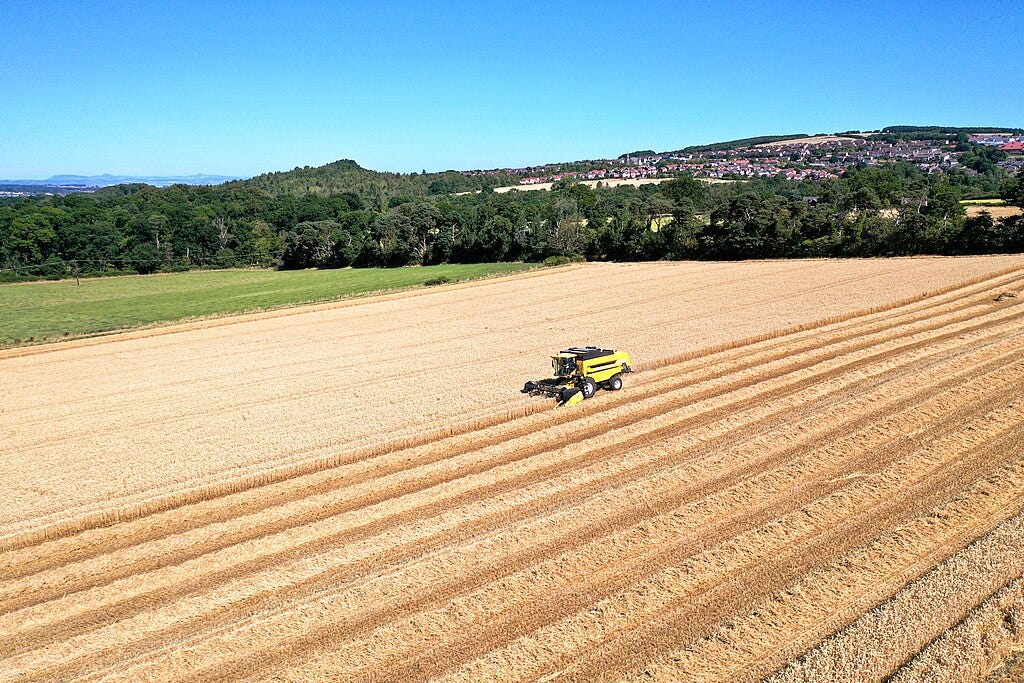
When we discuss the topic of British agriculture, and because most of the British agriculture is supported by England, we can miss important differences between the four countries of the United Kingdom. Scotland, Wales and Northern Ireland shared an important mass of their respective soils dedicated to agriculture — 80% of Scotland, 80% of Wales and 75% of Northern Ireland. These figures are higher than for England — 68% of the land mass. Contrary to England; Scotland, Wales and Northern Ireland soils and climate are less favorable to crops and vegetables. The same applies to Wales.
Lorsque nous abordons le sujet de l’agriculture britannique, et comme la majeure partie de l’agriculture britannique est soutenue par l’Angleterre, nous pouvons passer à côté de différences importantes entre les quatre pays du Royaume-Uni. L’Écosse, le Pays de Galles et l’Irlande du Nord ont en commun une grande partie de leurs terres consacrées à l’agriculture : 80 % en Écosse, 80 % au Pays de Galles et 75 % en Irlande du Nord. Ces chiffres sont supérieurs à ceux de l’Angleterre, où 68 % du territoire est consacré à l’agriculture. Contrairement à l’Angleterre, les sols et le climat de l’Écosse, du Pays de Galles et de l’Irlande du Nord sont moins propices aux cultures et aux légumes. Il en va de même pour le Pays de Galles.
The main agricultural activities are pasture farming and husbandry in these three UK countries — with typical products like milk, dairy and meat. In 2024, more than 70% of the agricultural revenues will be generated from England. 15% from Scotland, 4% from Northern Ireland and 8% from Wales. The figures proportions are the same regarding employment in agriculture. According to the DEFRA, 452,900 people were employed in the agricultural sector in the UK in 2024. 284,800 of them were employed in England (63% of agricultural workforce), 67,400 in Scotland (15% of agricultural workforce), 51,200 people in Northern Ireland (11% of agricultural workforce) and 49,500 people in Wales (11% of agricultural workforce).
Les principales activités agricoles dans ces trois pays du Royaume-Uni sont l’élevage et l’agriculture, avec des produits typiques tels que le lait, les produits laitiers et la viande. En 2024, plus de 70 % des revenus agricoles étaient générés par l’Angleterre, 15 % par l’Écosse, 4 % par l’Irlande du Nord et 8 % par le Pays de Galles. Les proportions sont les mêmes en ce qui concerne l’emploi dans l’agriculture. Selon le DEFRA, 452 900 personnes étaient employées dans le secteur agricole au Royaume-Uni en 2024. Parmi elles, 284 800 étaient employées en Angleterre (63 % de la main-d’œuvre agricole), 67 400 en Écosse (15 % de la main-d’œuvre agricole), 51 200 en Irlande du Nord (11 % de la main-d’œuvre agricole) et 49 500 au Pays de Galles (11 % de la main-d’œuvre agricole).
Scotland — Heritage of Land Clearances and Modern Challenges
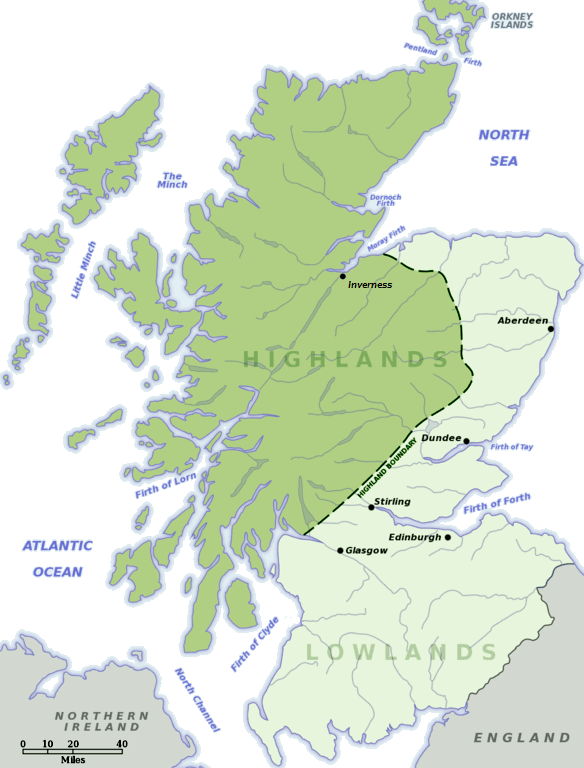
To better understand the specific constraints of agriculture in these three UK countries, we must look at the geography of these countries. We can begin with Scotland. Geographically speaking, Scotland is divided historically between the Highlands and the Lowlands as illustrated with this map below.
Pour mieux comprendre les contraintes spécifiques de l’agriculture dans ces trois pays du Royaume-Uni, nous devons examiner leur géographie. Commençons par l’Écosse. D’un point de vue géographique, l’Écosse est historiquement divisée entre les Highlands et les Lowlands, comme l’illustre la carte ci-dessous.
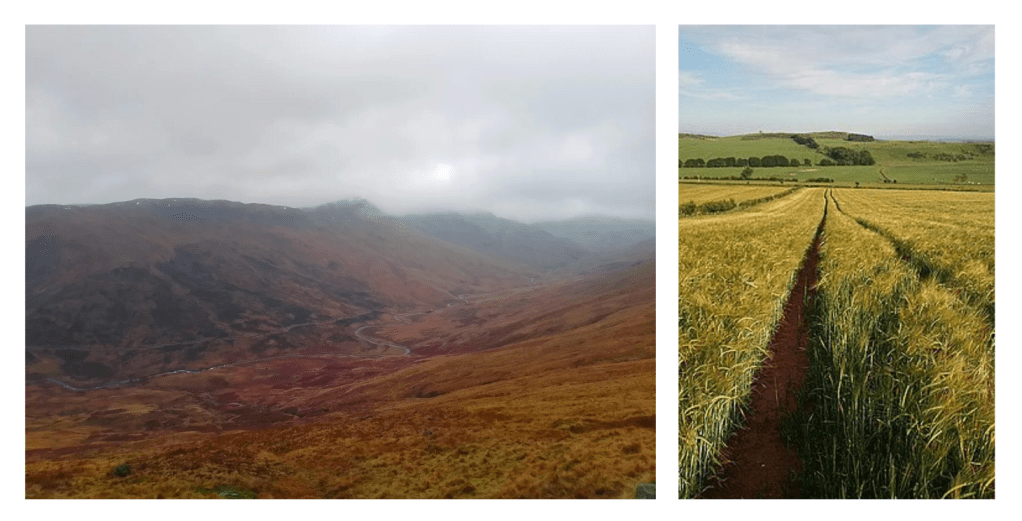
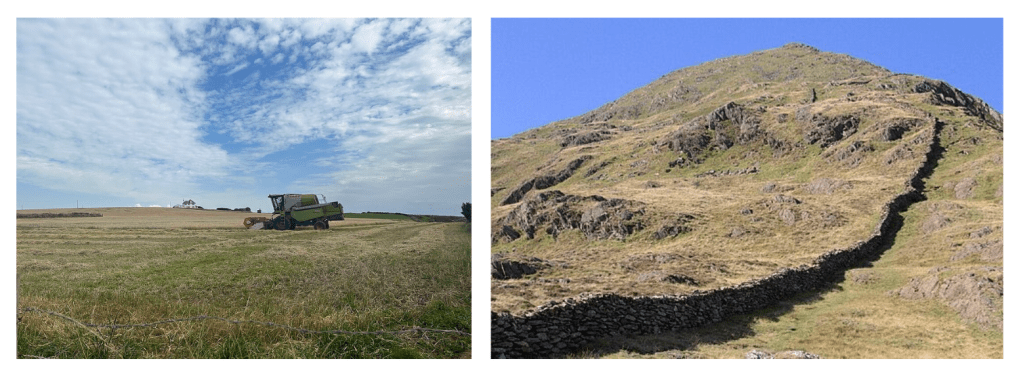
This contrast is well illustrated by the two following pictures. On the left, mountainous and moorlands in the Highlands. And on the right, a barley field near the Brotherstone Hill — a region located in the South-East of Scotland and known as the Scotland Borders.
Ce contraste est bien illustré par les deux photos suivantes. À gauche, les montagnes et les landes des Highlands. À droite, un champ d’orge près de Brotherstone Hill, une région située au sud-est de l’Écosse et connue sous le nom de Scotland Borders.
The history of agriculture in Scotland is deeply connected to its rugged landscape and harsh climate. From the Neolithic period, early communities cultivated barley and raised livestock in often challenging conditions. During the Middle Ages, agricultural systems were based on communal land worked under the “runrig” system, in which strips of land were shared among families. Sheep farming gradually became increasingly important, especially in the Highlands. From the eighteenth century onward, the transformations known as the Highland Clearances profoundly reshaped rural society. Many small tenants were evicted to make way for large-scale sheep farms that were considered more profitable. These changes led to massive emigration toward industrial cities and North America. At the same time, the Lowlands experienced rapid agricultural modernization. The introduction of new crop rotations and improved tools increased productivity. Sheep breeds such as the Scottish Blackface became emblematic of Scottish landscapes. Barley remained a strategic crop, particularly for whisky production. In the nineteenth century, Scottish agriculture became more integrated into the wider British market. The twentieth century brought mechanization and intensified farming practices. Today, Scottish agriculture combines extensive livestock farming with specialized productions. Environmental concerns now play an increasingly important role in rural policies. Farmers must balance profitability with the preservation of fragile ecosystems. The historical legacy remains visible in land ownership patterns and in the open landscapes of the Highlands.
L’histoire de l’agriculture en Écosse est profondément liée à son relief accidenté et à son climat rude. Dès le Néolithique, les premières communautés cultivent l’orge et élèvent du bétail dans des conditions souvent difficiles. Au Moyen Âge, les systèmes agraires reposent sur des terres communautaires exploitées selon la méthode des « runrigs », où les parcelles sont réparties entre les familles. L’élevage ovin prend progressivement une place importante, notamment dans les Highlands. À partir du XVIIIe siècle, les transformations connues sous le nom de Highland Clearances bouleversent les campagnes. De nombreux petits tenanciers sont expulsés pour faire place à de vastes exploitations ovines plus rentables. Ces changements provoquent une émigration massive vers les villes industrielles ou vers l’Amérique du Nord. En parallèle, les Lowlands connaissent une modernisation agricole rapide. L’introduction de nouvelles rotations culturales et d’outils plus performants augmente la productivité. L’élevage de races ovines comme la Scottish Blackface devient emblématique des paysages écossais. L’orge reste une culture stratégique, notamment pour la production de whisky. Au XIXe siècle, l’agriculture écossaise s’intègre davantage au marché britannique. Le XXe siècle apporte la mécanisation et l’intensification des pratiques. Aujourd’hui, l’agriculture écossaise combine élevage extensif et productions spécialisées. Les préoccupations environnementales occupent une place croissante dans les politiques rurales. Les agriculteurs doivent concilier rentabilité et préservation des écosystèmes fragiles. L’héritage historique demeure visible dans les structures foncières et les paysages ouverts des Highlands.
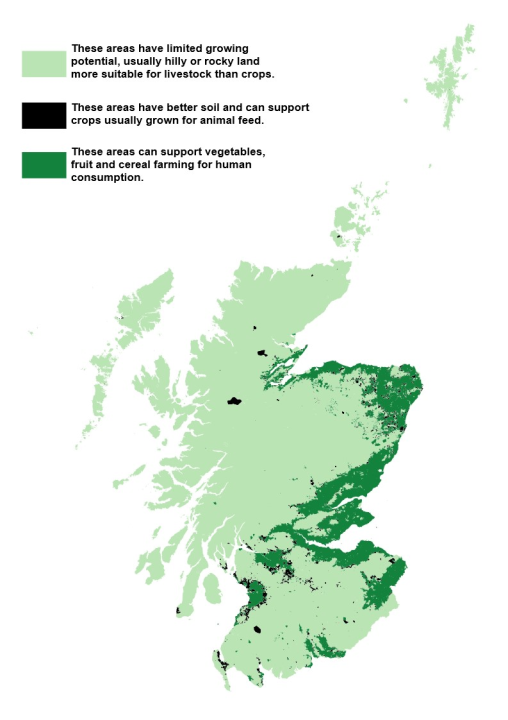
The Highlands’s soils are extremely poor and mainly dedicated to shepherds today, while the Lowlands are where the arable soil stands — especially along the East coast. The Highland’s were subject to a massive clearance campaign between 1750 and 1860 leading to mass migration inside Scotland, and also to the collapse of many agricultural traditions in the Highlands. The Highland clearance led to the creation of the crofting system — where small amounts of arable lands were enclosed and integrated into the tenant farming system. The main crops of Scotland today are barley, potatoes, carrots and also wheat. The situation is illustrated with the map below.
Les sols des Highlands sont extrêmement pauvres et principalement consacrés à l’élevage aujourd’hui, tandis que les Lowlands abritent les terres arables, en particulier le long de la côte est. Les Highlands ont fait l’objet d’une campagne de défrichage massive entre 1750 et 1860, qui a entraîné une migration massive à l’intérieur de l’Écosse, ainsi que l’effondrement de nombreuses traditions agricoles dans les Highlands. Le défrichage des Highlands a conduit à la création du système de crofting, dans lequel de petites parcelles de terres arables ont été clôturées et intégrées au système de fermage. Les principales cultures de l’Écosse sont aujourd’hui l’orge, les pommes de terre, les carottes et le blé. La situation est illustrée par la carte ci-dessous.
Wales — A Dwindling Agriculture ?
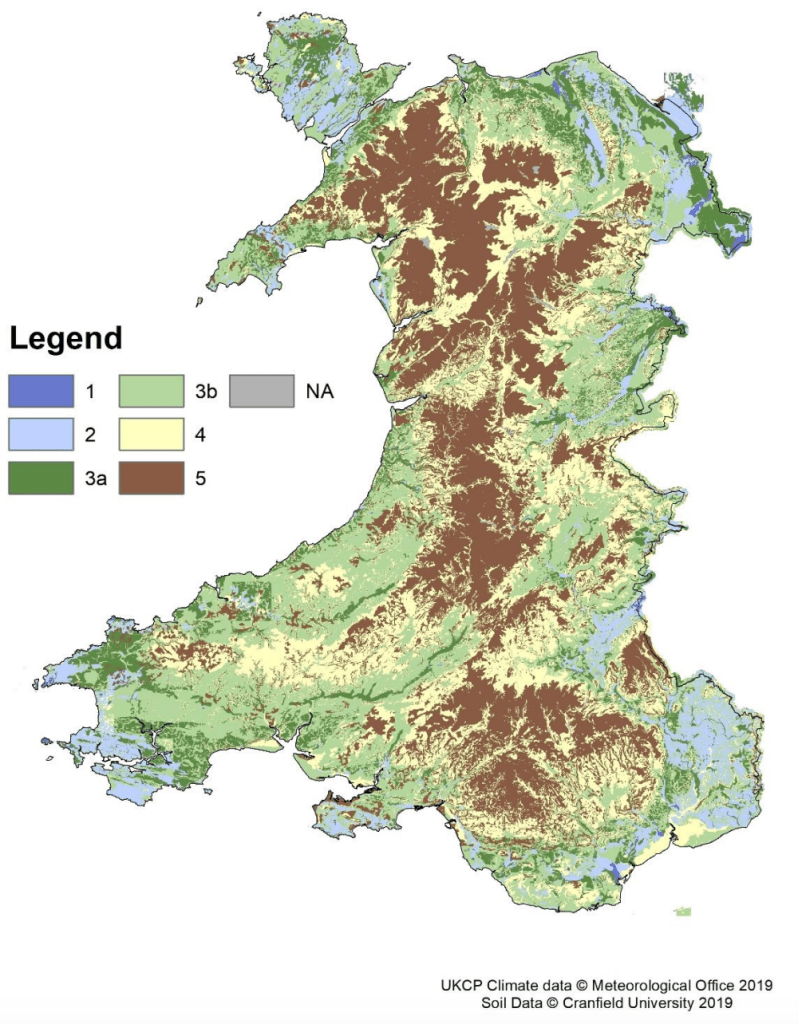
The same applies to Wales. Most of the country is largely unable to grow crops given the large mass of poor soils, especially in the middle of the country — known as the Cambrian mountains. The sole arable land pockets are located near the coasts. This is illustrated with the map below using the British system of soil classification known as “Grades” — Grade 1 soils are the best ones and Grade 5 soils are the worst.
Il en va de même pour le Pays de Galles. La majeure partie du pays est en grande partie incapable de cultiver des céréales en raison de la grande quantité de sols pauvres, en particulier au centre du pays, dans la région connue sous le nom de montagnes cambriennes. Les seules poches de terres arables sont situées près des côtes. Ceci est illustré par la carte ci-dessous, qui utilise le système britannique de classification des sols appelé « Grades » : les sols de Grade 1 sont les meilleurs et ceux de Grade 5 sont les pires.
As with Scotland, we can illustrate this contrast with the two following pictures. On the left, a combine harvester near Rhossili, Gower (a coastal western region of Wales). On the right, a dry wall near Yr Aran — a mountain inside the Wales country.
Comme pour l’Écosse, nous pouvons illustrer ce contraste à l’aide des deux photos suivantes. À gauche, une moissonneuse-batteuse près de Rhossili, dans la région côtière occidentale du Pays de Galles, Gower. À droite, un mur en pierres sèches près d’Yr Aran, une montagne située à l’intérieur des terres galloises.
Welsh agriculture developed in a predominantly mountainous environment that was not well suited to large-scale arable farming. From the medieval period, rural communities practiced subsistence agriculture largely based on livestock rearing. The green hills particularly favored sheep farming. Over the centuries, sheep became central to the Welsh rural economy. Wool was an essential resource until the rise of the textile industry. Farms were often small and family-run. Unlike some regions of England, Wales experienced slower agricultural industrialization. During the eighteenth and nineteenth centuries, technical improvements were introduced, but livestock farming remained dominant. Local cattle breeds such as the Welsh Black gained a strong reputation. Fertile valleys also allowed the cultivation of cereals and fodder crops. In the nineteenth century, demographic pressure pushed many Welsh people to emigrate. Nevertheless, agriculture remained a cultural and linguistic cornerstone of the country. In the twentieth century, modernization gradually transformed farms. The United Kingdom’s entry into the European Economic Community altered subsidies and farming practices. Today, Welsh agriculture focuses on sustainable livestock production and high-quality goods. The landscapes of Snowdonia reflect this long pastoral tradition. Farms are adapting to climate and environmental challenges. The promotion of local products strengthens Welsh agricultural identity. Agriculture remains a central element of rural culture and the national economy.
L’agriculture galloise s’est développée dans un environnement majoritairement montagneux, peu propice aux grandes cultures. Dès l’époque médiévale, les communautés rurales pratiquent une agriculture de subsistance fondée sur l’élevage. Les collines verdoyantes favorisent particulièrement l’élevage ovin. Au fil des siècles, le mouton devient l’animal central de l’économie rurale galloise. La laine constitue une ressource essentielle jusqu’à l’essor de l’industrie textile. Les fermes sont souvent de petite taille et familiales. Contrairement à certaines régions anglaises, le Pays de Galles connaît une industrialisation agricole plus lente. Au XVIIIe et XIXe siècles, des améliorations techniques sont introduites, mais l’élevage reste dominant. Des races bovines locales comme la Welsh Black acquièrent une solide réputation. Les vallées fertiles permettent également la culture de céréales et de fourrages. Au XIXe siècle, la pression démographique pousse de nombreux Gallois à émigrer. L’agriculture reste cependant un pilier culturel et linguistique du pays. Au XXe siècle, la modernisation transforme progressivement les exploitations. L’entrée du Royaume-Uni dans la Communauté économique européenne modifie les subventions et les pratiques. Aujourd’hui, l’agriculture galloise est tournée vers l’élevage durable et la qualité des produits. Les paysages du Snowdonia témoignent de cette tradition pastorale ancienne. Les exploitations s’adaptent aux enjeux climatiques et environnementaux. La valorisation des produits locaux renforce l’identité agricole galloise. L’agriculture demeure un élément central de la culture et de l’économie rurales du pays.
Northern Ireland — Brexit and Heredity
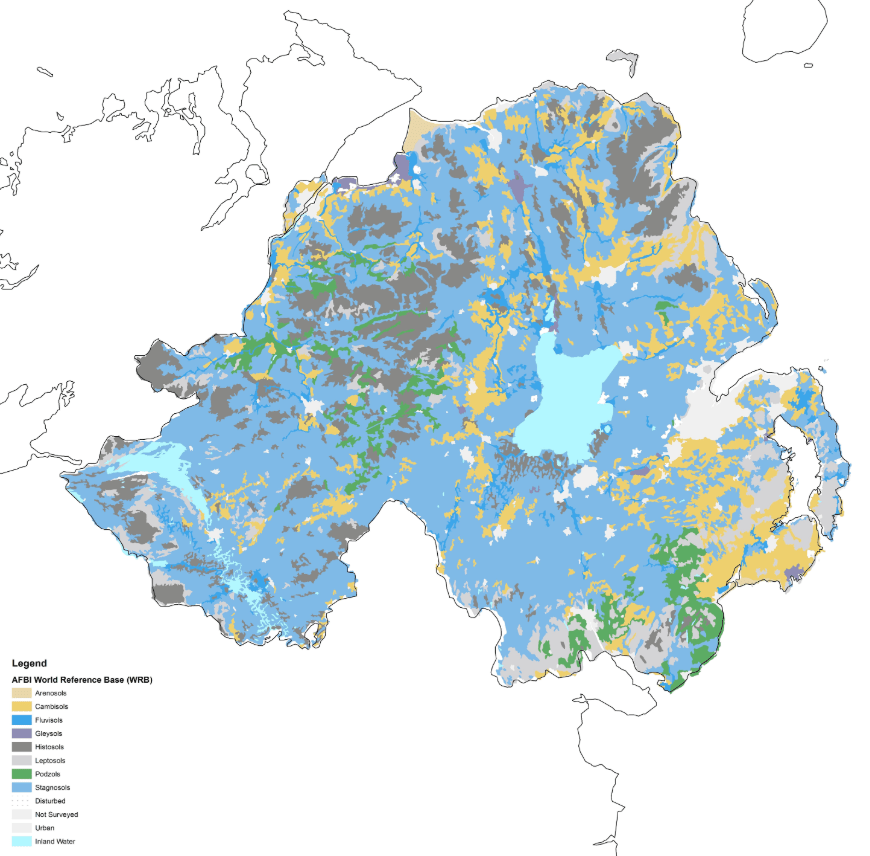
The situation is similar in Northern Ireland. The quality of the soils combined with the specific climate — heavy rains and moisture — limit the country’s agriculture system to husbandry. The situation is illustrated too with the map below.
La situation est similaire en Irlande du Nord. La qualité des sols, combinée au climat spécifique (fortes pluies et humidité), limite le système agricole du pays à l’élevage. La situation est également illustrée par la carte ci-dessous.
Agriculture in Northern Ireland has a history shaped by political and social transformations. From the Gaelic period, communities practiced livestock farming and cultivated barley and oats. In the seventeenth century, the Plantation of Ulster profoundly altered land ownership structures. British settlers introduced new farming methods and reorganized property systems. Agriculture became both an economic and identity issue. In the eighteenth century, the region developed commercial crops such as flax. Dependence on the potato increased among poorer rural populations. The famine associated with the Great Famine struck society severely in the mid-nineteenth century. Although Northern Ireland was less affected than other parts of Ireland, the consequences were still significant. Emigration and poverty left a lasting mark on rural communities. In the twentieth century, agriculture shifted toward cattle and dairy farming. Most farms remained family-owned. Modernization and mechanization improved yields after the Second World War. British and later European agricultural policies strongly influenced the sector. Today, Northern Ireland is known for its dairy and beef production. Its green pastures favor high-quality extensive livestock farming. Recent trade agreements have reshaped economic outlets. Agriculture remains a key sector of the regional economy. It reflects both a deep historical heritage and contemporary challenges related to trade and environmental sustainability.
L’agriculture en Irlande du Nord possède une histoire marquée par les transformations politiques et sociales. Dès la période gaélique, les populations pratiquent l’élevage et cultivent l’orge et l’avoine. Au XVIIe siècle, la Plantation of Ulster modifie profondément la structure foncière. Des colons britanniques introduisent de nouvelles méthodes agricoles et restructurent la propriété des terres. L’agriculture devient un enjeu économique et identitaire. Au XVIIIe siècle, la région développe des cultures commerciales comme le lin. La dépendance à la pomme de terre s’accentue parmi les populations rurales pauvres. La grande famine liée à la Great Famine frappe durement la société au milieu du XIXe siècle. Bien que l’Irlande du Nord soit moins touchée que d’autres régions, les conséquences sont profondes. L’émigration et la pauvreté marquent durablement les campagnes. Au XXe siècle, l’agriculture s’oriente vers l’élevage bovin et laitier. Les exploitations restent majoritairement familiales. La modernisation et la mécanisation améliorent les rendements après la Seconde Guerre mondiale. Les politiques agricoles britanniques puis européennes influencent fortement le secteur. Aujourd’hui, l’Irlande du Nord est réputée pour sa production laitière et bovine. Les prairies verdoyantes favorisent un élevage extensif de qualité. Les accords commerciaux récents redéfinissent les débouchés économiques. L’agriculture demeure un secteur clé de l’économie régionale. Elle reflète à la fois l’héritage historique et les défis contemporains liés au commerce et à l’environnement.
Conclusions
With this article, we got the opportunity to discover the specific role of Scotland, Wales and Northern Ireland in the larger framework of British Agriculture. While England is still historically and economically the heart of the British agricultural system, these countries matter too. As with England, concerns are growing with the consequences of Brexit (especially in Northern Ireland), climate changes and hardship faced by husbandry in the UK — something crucial in Scotland, Wales and Northern Ireland.
Cet article nous a permis de découvrir le rôle spécifique de l’Écosse, du Pays de Galles et de l’Irlande du Nord dans le cadre plus large de l’agriculture britannique. Si l’Angleterre reste historiquement et économiquement le cœur du système agricole britannique, ces pays ont également leur importance. Comme en Angleterre, les inquiétudes grandissent quant aux conséquences du Brexit (en particulier en Irlande du Nord), aux changements climatiques et aux difficultés rencontrées par l’élevage au Royaume-Uni, un secteur crucial en Écosse, au Pays de Galles et en Irlande du Nord.
 Simon CHABROL
Laisser un commentaire